Why RT‑PCR Remains the Gold Standard
RT‑PCR detects SARS‑CoV‑2 RNA with analytical sensitivity that can identify a few hundred copies per millilitre, far surpassing antigen tests and guaranteeing near‑perfect specificity when proper controls are used. Its ability to amplify viral RNA from nasopharyngeal or oropharyngeal swabs—specimens that carry the highest viral load during the first week of illness—makes it the most reliable method for early diagnosis. International health agencies (WHO, CDC, ICMR) and accredited laboratories such as Agam Diagnostics (NABL‑ and ICMR‑certified) endorse RT‑PCR as the definitive molecular test, supporting case confirmation, contact tracing, and outbreak containment. Because the assay can be rapidly adapted to emerging variants and provides quantitative cycle‑threshold values that guide clinical decision‑making, RT‑PCR remains indispensable for both individual patient care and public‑health surveillance.
Understanding RT‑PCR Technology
What does RT‑PCR stand for and how does it work?
RT‑PCR stands for reverse‑transcription polymerase chain reaction. The assay first converts SARS‑CoV‑2 viral RNA into complementary DNA (cDNA) using reverse transcriptase. The cDNA then undergoes PCR amplification: each cycle includes denaturation (≈95 °C), primer annealing (≈58 °C), and extension, exponentially multiplying the target sequences. Real‑time fluorescence detection – either probe‑based (e.g., TaqMan) or intercalating dyes – monitors product formation cycle‑by‑cycle, generating a cycle‑threshold (Ct) value that reflects viral load.
Principle of reverse transcription
Reverse transcriptase synthesizes cDNA from RNA, preserving the viral genetic information for DNA‑based amplification. This step is crucial because conventional PCR can only amplify DNA.
Amplification process
Repeated thermal cycling amplifies the target region, producing billions of copies. The fluorescence signal rises proportionally, allowing quantitative interpretation.
Real‑time fluorescence detection
Fluorescent probes emit light when hybridized to the amplicon, enabling continuous monitoring without opening tubes, thus reducing contamination risk.
One‑step versus two‑step RT‑PCR
In One‑step RT‑PCR, reverse transcription and amplification occur in a single tube, shortening turnaround and limiting handling errors. Two‑step RT‑PCR separates cDNA synthesis from PCR, offering higher sensitivity and flexibility for multiplexing, albeit with a longer workflow.
Specimen Types and Timing
Upper‑respiratory tract samples—nasopharyngeal (NP) and oropharyngeal (OP) swabs— provide the highest detection rate for SARS‑CoV‑2 because viral loads are greatest in the nasopharynx during the first week of illness. Sputum and deep nasal swabs also show high viral concentrations, especially within the first 14 days, while throat swabs become reliable only after 7‑8 days of symptoms.
Optimal collection window – The most reliable sampling period is 5‑7 days after symptom onset or at least five full days after a known exposure. Viral RNA peaks in the first week and then declines; testing too early (within 48 hours of exposure) or too late (after day 10‑14) raises the risk of false‑negative results.
Alternative specimens – Saliva and sputum are accepted in many laboratories and can approximate the sensitivity of NP/OP swabs when collected correctly, but NP/OP swabs remain the preferred standard for maximal detection accuracy.
Interpreting Results and Ct Values
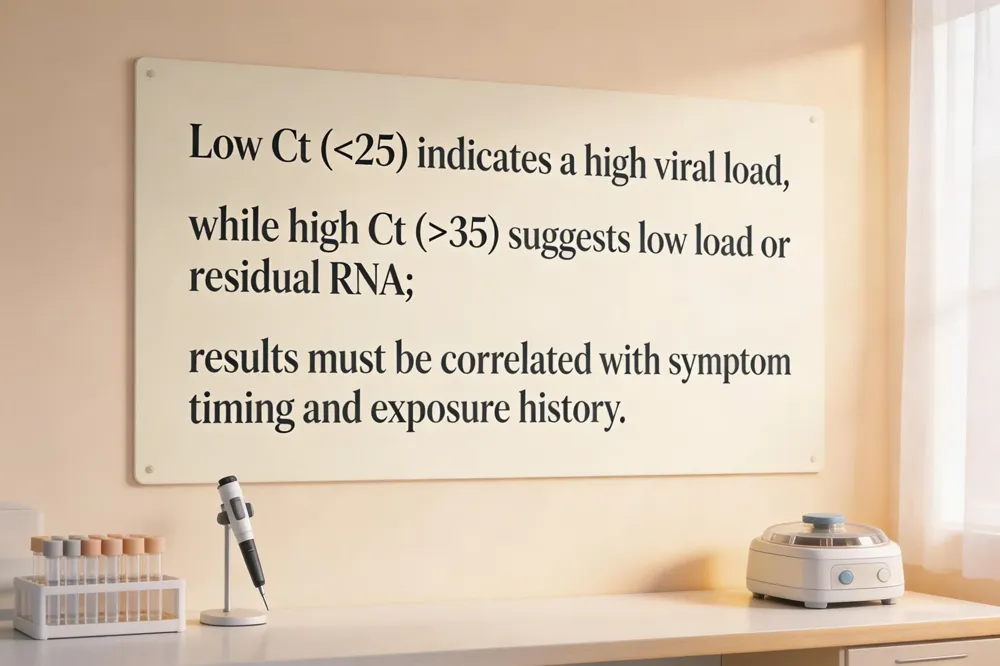
The cycle threshold (Ct) is the PCR cycle at which the fluorescent signal first crosses a preset detection limit. Because each cycle doubles the amount of amplified product, Ct is inversely proportional to the quantity of viral RNA present: low Ct values (e.g., < 25) reflect a high viral load, whereas high Ct values (e.g., > 35) indicate a low viral load or only residual RNA fragments. Estimating viral load from Ct requires a calibrated standard curve, but in routine diagnostics the Ct itself serves as a semi‑quantitative proxy. High Ct values must be interpreted cautiously; they may arise when the sample is taken late in infection, after viral clearance, or when the assay is approaching its limit of detection. In such cases, clinical correlation with symptom timing, exposure history, and, if needed, repeat testing is essential to determine whether the patient is still infectious. Thus, Ct values provide valuable insight into viral dynamics, but they are not standalone diagnostic conclusions.
Accuracy, Sensitivity, and False Results
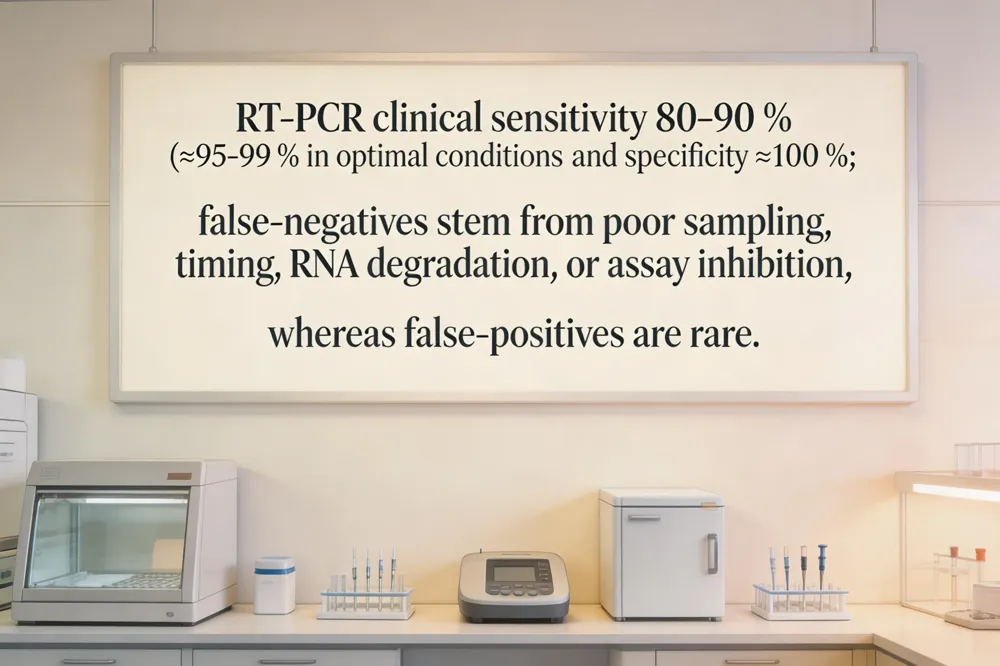
RT‑PCR remains the gold‑standard molecular test for COVID‑19 offers analytical sensitivities that can detect as few as 100–500 copies of viral RNA per reaction and clinical sensitivities of 80‑90 % when the virus is present. In contrast, rapid antigen tests typically achieve 70‑80 % sensitivity and may miss more than 15 % of infections, especially in asymptomatic individuals. Specificity of RT‑PCR is near 100 %, with false‑positive rates below 1 % because the assay targets conserved viral gene regions and employs probe‑based detection. False‑negative RT‑PCR results arise most commonly from improper sample collection (shallow nasopharyngeal swab, inadequate rotation), testing too early or too late when viral load is low, RNA degradation during transport or storage, mutations in primer‑probe binding sites, and technical issues such as reagent failure or inhibition. Rare false‑positive outcomes result from laboratory contamination, cross‑reactivity with other coronaviruses, or detection of residual non‑viable RNA after recovery; stringent quality‑control measures—including no‑template controls, minus‑RT controls, and internal extraction controls—minimize this risk.
Turnaround Time and Laboratory Workflow
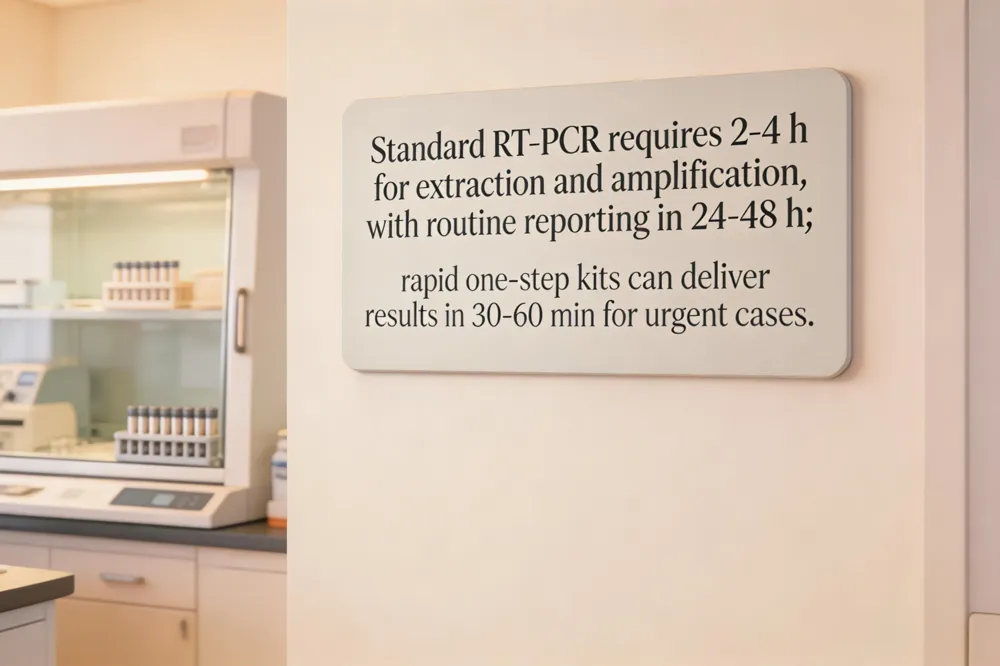
Standard RT‑PCR assays for SARS‑CoV‑2 require 2‑4 hours for RNA extraction, reverse transcription, and amplification. After the sample reaches the laboratory, most accredited facilities (e.g., NABL‑ and ICMR‑accredited labs such as Agam Diagnostics) report results within 24‑48 hours, allowing time for specimen receipt, quality‑control checks, and electronic delivery. High‑throughput automated platforms further compress the workflow by integrating magnetic‑bead extraction and real‑time PCR in a single‑run format, enabling many hundreds of samples to be processed daily and reducing hands‑on time. For urgent cases, Rapid one‑step RT‑PCR kits combine reverse transcription and amplification in a single reaction, delivering results in 30‑60 minutes; these assays have a slightly higher limit of detection but retain high specificity. Laboratories can therefore offer a tiered service: routine testing with a 1‑2‑day turnaround, and same‑day or sub‑2‑hour reporting for critical patients, emergency departments, or outbreak investigations.
Home Collection and Quality Assurance at Agam Diagnostics
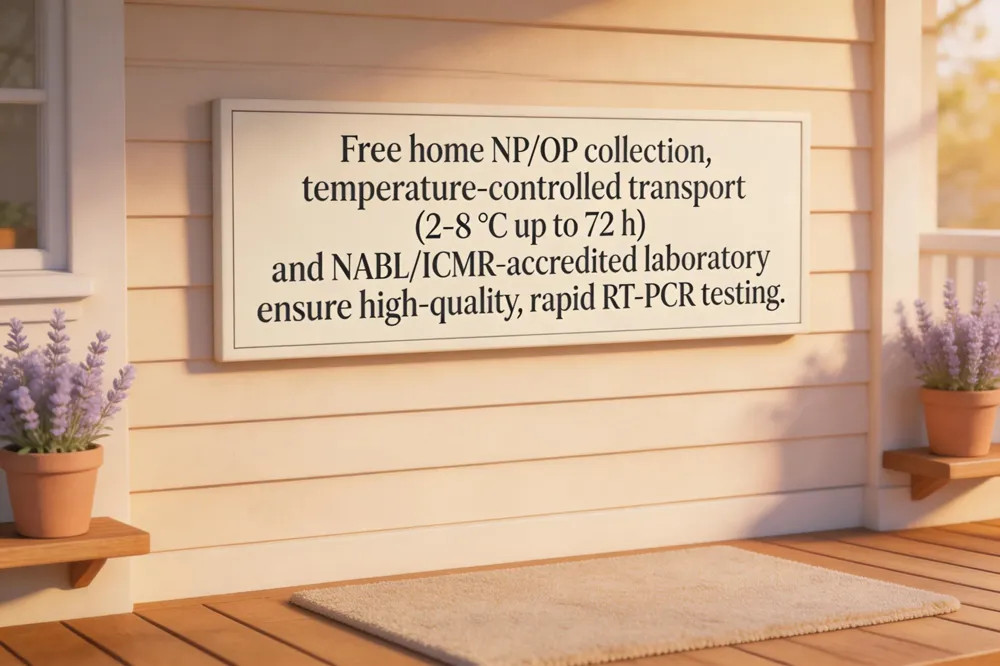
Agam Diagnostics offers free home‑collection of nasopharyngeal (NP) and oropharyngeal (OP) swabs, allowing patients to stay at home while a trained phlebotomist obtains the specimen. This service eliminates travel, reduces exposure risk, and ensures that samples are collected promptly after symptom onset or exposure. Each swab is placed in viral transport medium, sealed, and placed in a temperature‑controlled container that maintains 2‑8 °C for up to 72 hours, preserving RNA integrity before the specimen reaches the laboratory.
The laboratory operates under NABL and ICMR accreditation, which mandates strict adherence to standardized protocols, routine proficiency testing, and documented quality‑control measures. Accreditation guarantees that the RT‑PCR assay meets high sensitivity (≈95‑99 %) and specificity (>99 %) thresholds, and that results are reproducible across batches.
Upon arrival, samples undergo automated RNA extraction on high‑throughput platforms, followed by real‑time RT‑PCR with built‑in internal controls (e.g., RNase P). Results are generated within 4‑6 hours and delivered electronically, providing rapid, reliable diagnosis while maintaining the highest laboratory standards.
Common Misconceptions and FAQs
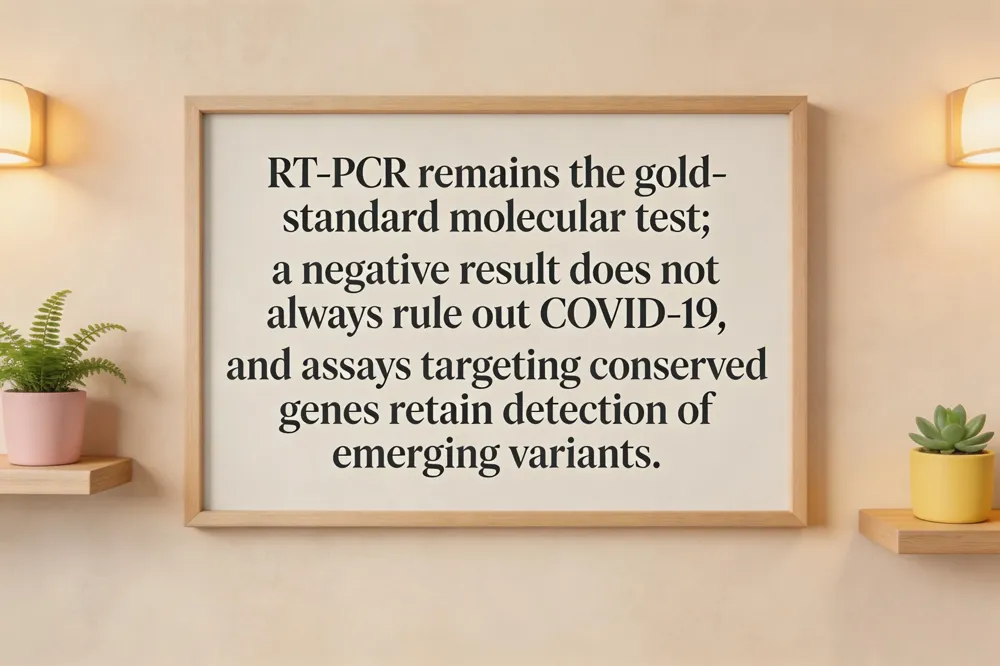
RT‑PCR remains the gold‑standard molecular test, while rapid antigen kits detect viral proteins. PCR’s analytical sensitivity (detecting a few RNA copies) yields >95 % sensitivity, whereas antigen tests though delivering results in 15‑30 minutes, capture only 70‑80 % of infections, especially in asymptomatic or early disease.
Does a negative PCR result always rule out COVID‑19? No. A negative PCR result reflects the viral load at the moment of sampling. Testing within 48 hours of exposure, using a shallow swab, or sampling after viral clearance can produce false‑negatives. If symptoms appear or exposure risk stays high, repeat PCR after 48‑72 hours is advised.
Can RT‑PCR detect emerging SARS‑CoV‑2 variants? Most RT‑PCR assays target conserved regions (N, E, RdRp). Manufacturers regularly review primer‑probe sets against circulating SARS‑CoV‑2 genomes to retain detection of new variants such as Delta and Omicron. However, mutations in binding sites can reduce sensitivity, so laboratories monitor genomic data and adjust assays as needed.
How does PCR differ from rapid antigen tests? PCR amplifies viral RNA, offering high sensitivity and specificity, but requires laboratory processing and a 4‑24‑hour turnaround. Rapid antigen tests detect viral proteins, give immediate results, but miss a substantial proportion of low‑viral‑load cases; negative antigen results in symptomatic individuals should be confirmed by PCR.
Key Takeaways and Next Steps
RT‑PCR remains the gold‑standard diagnostic for COVID‑19 because it amplifies viral RNA with high sensitivity (≈95‑99 %) and specificity (>99 %). The test is most reliable when performed on nasopharyngeal or oropharyngeal swabs collected within the first 5‑7 days of symptom onset; viral load peaks in sputum and nasal swabs during the first two weeks, while throat swabs become reliable only after 7‑8 days. Improper technique, delayed transport, or using the wrong swab type can cause false‑negative results. Agam Diagnostics in Madurai offers NABL‑ and ICMR‑accredited free home‑collection of NP/OP swabs, automated RNA extraction, and rapid reporting (often within 24 hours). If symptoms persist despite a negative RT‑PCR, seek a healthcare professional for repeat testing, clinical evaluation, or alternative diagnostics such as antigen or serology assays.