Why DNA Testing Matters
Genetic testing is now a cornerstone of modern oncology, enabling clinicians to identify inherited (germline) mutations such as BRCA1/2, TP53, and Lynch‑syndrome genes, as well as somatic alterations that guide targeted therapies and immunotherapy. In India, hereditary cancer syndromes remain markedly under‑diagnosed because of limited access to affordable, accredited genetic services, leading many high‑risk families to miss preventive surveillance and risk‑reducing options. Agam Diagnostics addresses this gap by offering comprehensive medical‑genetics testing—including multigene panels for hereditary risk and tumor DNA profiling—through free home collection, rapid 7‑10‑day turnaround, and full NABL and ICMR accreditation, ensuring high‑quality, reliable results for clinicians and patients alike. These services empower patients to receive surveillance schedules, prophylactic interventions, and eligibility for targeted drugs, ultimately improving outcomes.
Understanding Germline vs. Somatic DNA Testing

Germline (inherited) genetic testing examines DNA from blood or saliva to identify pathogenic variants such as BRCA1/2, TP53, or Lynch‑syndrome genes that raise a person’s lifetime cancer risk. Results guide personalized surveillance, risk‑reducing surgery, and cascade testing of relatives. Somatic testing analyzes DNA extracted from a cancer biopsy or liquid biopsy to detect acquired mutations—e.g., EGFR, KRAS, BRAF, HER2—that drive tumor growth and predict response to targeted therapies or immunotherapies. Clinically, germline testing informs preventive strategies and may uncover eligibility for drugs like PARP inhibitors, while somatic testing directs treatment choices for the current disease, such as EGFR inhibitors in lung cancer or HER2‑targeted therapy in breast cancer. The two approaches are complementary: a somatic panel can reveal a germline‑relevant mutation, prompting germline confirmation, and germline results can affect therapy decisions (e.g., avoiding radiation in TP53 carriers). Together they enable a precision‑medicine workflow that spans risk assessment, early detection, and individualized treatment.
The Role of Genetic Counseling

Genetic counseling is a cornerstone of cancer risk management. Pre‑test risk assessment begins with a detailed three‑generation family history, personal cancer diagnoses, and clinical factors (e.g., early‑onset disease, multiple tumor types) to determine eligibility for germline testing and to select the most relevant gene panel. Interpretation of results is performed by certified counselors who classify findings as pathogenic, likely pathogenic, variant of uncertain significance, or negative, and explain how each category influences surveillance, prophylactic surgery, or targeted therapy (e.g., PARP inhibitors for BRCA‑mutated tumors). Psychosocial support addresses anxiety, potential stigma, and ethical concerns, providing coping strategies and clear communication about insurance protection under regulations such as GINA. Finally, family cascade testing is offered to at‑risk relatives, enabling early detection and preventive interventions across the family unit. Accredited laboratories like Agam Diagnostics (NABL, ICMR) ensure high‑quality results, while free home collection and rapid turnaround facilitate timely counseling and clinical decision‑making.
Biomarker Testing and Targeted Therapy
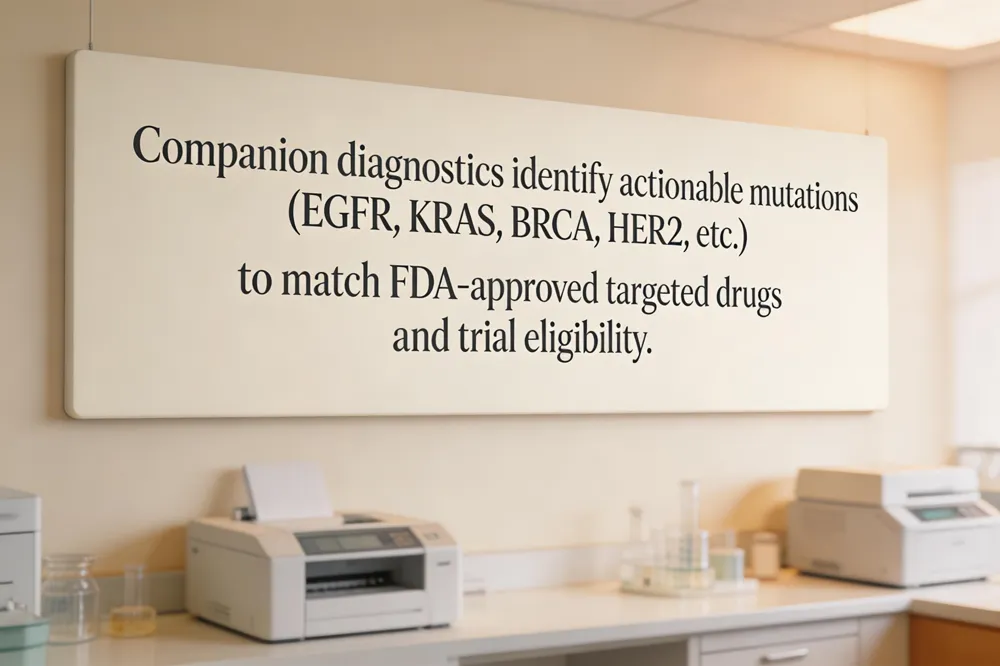
Companion diagnostic tests pair a specific biomarker assay with an FDA‑approved drug to predict therapeutic effectiveness, turning tumor molecular profiling into a decision‑making tool. Common actionable mutations identified by biomarker testing include EGFR, ALK, KRAS, BRAF, HER2, BRCA1/2, and MSI‑H, each linked to a targeted therapy such as EGFR inhibitors, ALK inhibitors, PARP inhibitors, or HER2‑directed antibodies. Detecting these alterations guides clinicians in selecting the most appropriate regimen—often sparing patients from ineffective chemotherapy and reducing toxicity. Moreover, biomarker results determine eligibility for clinical trials, including basket or umbrella studies, where patients receive novel agents matched to their tumor’s genetic makeup. By integrating companion diagnostics, actionable mutation panels, and trial enrollment criteria, biomarker testing enables truly personalized oncology care.
Personalized Surveillance and Risk‑Reduction Strategies

Individuals who test positive for hereditary cancer mutations benefit from tailored surveillance, prophylactic interventions, chemoprevention, and cascade testing of relatives. Screening schedules are intensified: BRCA1/2 carriers begin annual breast MRI (and mammography after age 30) and ovarian ultrasound or CA‑125 monitoring starting at 35‑40 years, while Lynch‑syndrome carriers undergo colonoscopy every 1–2 years beginning at 20‑25 years and consider endometrial sampling. Prophylactic surgeries offer risk‑reducing options—bilateral mastectomy and salpingo‑oophorectomy dramatically lower breast and ovarian cancer incidence in BRCA mutation carriers, and total colectomy reduces colorectal cancer in high‑penetrance MMR gene families. Chemoprevention, such as tamoxifen for BRCA‑positive women or aspirin for Lynch‑syndrome patients, further attenuates risk. Finally, cascade testing of first‑degree relatives identifies additional mutation carriers, enabling early entry into these surveillance and preventive programs and extending the benefit of the index patient’s genetic insight to the entire family.
Agam Diagnostics: Delivering Quality Genetic Services

Agam Diagnostics, a fully automated pathology laboratory in Madurai, Tamil Nadu, India, combines rigorous accreditation with patient‑centric logistics to provide reliable genetic testing for cancer risk and treatment. The laboratory is accredited by the National Accreditation Board for Testing and Calibration Laboratories (NABL) and the Indian Council of Medical Research (ICMR), guaranteeing compliance with international quality standards, reproducible results, and secure data handling. To remove geographic barriers, Agam offers free home collection of blood or saliva samples, allowing patients in remote or underserved areas to access testing without traveling to a clinic. Once the specimen arrives, next‑generation sequencing (NGS) panels are run on a high‑throughput, fully automated platform, delivering comprehensive analysis of 40‑plus cancer‑related genes within 7‑10 days—a rapid turnaround that supports timely clinical decision‑making. Throughout the process, certified genetic counselors interpret results, explain their clinical significance, and guide patients and their families on surveillance, risk‑reduction, and therapeutic options, ensuring that each test translates into actionable, personalized care.
Overcoming Barriers to Genetic Testing in India

Awareness and education remain the first hurdle; many Indian patients are unaware that 5‑10 % of cancers are hereditary and that testing can guide both prevention and therapy. Community outreach and training of primary‑care physicians can improve referral rates, especially when family‑history questionnaires are used to identify high‑risk individuals. Cultural stigma surrounding cancer and genetic disease often discourages discussion of hereditary risk. Certified genetic counselors can provide culturally sensitive counseling that addresses fears of discrimination and promotes informed decision‑making. Insurance coverage varies widely, but guidelines from NCCN and ASCO recommend reimbursement for germline panels when clinical criteria are met; clear communication between oncologists, counselors, and insurers can increase approval rates. Finally, infrastructure and access are expanding through initiatives such as Agam Diagnostics, which offers free home collection, rapid 7‑10‑day turnaround, and NABL/ICMR‑accredited testing, thereby reaching rural populations and reducing logistical barriers.
Future Directions: Liquid Biopsy, AI, and Clinical Trials

Liquid biopsy offers a minimally invasive way to capture circulating tumor DNA (ctDNA), enabling real‑time monitoring of tumor evolution, early detection of resistance mutations, and access to profiling when tissue is scarce. Coupled with high‑throughput next‑generation sequencing, it can reveal actionable alterations such as EGFR T790M or BRCA reversion mutations, guiding timely therapy switches. Artificial intelligence accelerates the interpretation of these complex genomic datasets, flagging clinically relevant variants, predicting tumor mutational burden, and integrating multi‑omics signals to prioritize treatment options. AI‑driven platforms also streamline patient matching for basket trials, where enrollment is based on a shared biomarker—regardless of tumor site—expanding access to targeted agents for rare alterations like NTRK fusions or high microsatellite instability. Emerging biomarkers, including tumor‑derived exosomal RNA, epigenetic signatures, and proteomic panels, promise to refine risk stratification and therapeutic selection, further cementing liquid biopsy, AI, and adaptive trial designs as pillars of next‑generation precision oncology.
Putting DNA Testing into Practice
Genetic testing delivers concrete benefits: it pinpoints inherited cancer‑predisposition mutations (e.g., BRCA1/2, Lynch genes), enables earlier, intensified surveillance, informs risk‑reducing surgeries, and guides tumor‑targeted therapies such as PARP or EGFR inhibitors. Patients with strong family histories, early‑onset disease, or rare syndromes should discuss testing with a certified genetic counselor, and providers must integrate testing into routine oncology workflows. Timely ordering of germline and somatic panels—ideally through accredited facilities—guarantees reliable, high‑quality results that meet international standards (NABL, ICMR). Accredited labs such as Agam Diagnostics offer free home collection and rapid turnaround, removing barriers and ensuring that accurate DNA insights translate into personalized prevention and treatment plans.