Why Sample Pooling Matters in Today’s Testing Landscape
The surge in COVID‑19 surveillance, especially for asymptomatic populations, has created a relentless demand for high‑throughput RT‑PCR testing. Laboratories face concurrent constraints: dwindling reagent supplies, limited extraction kits, and staff shortages that bottleneck turnaround time. Sample pooling directly addresses these challenges by combining 4‑10 individual swabs into a single reaction, cutting the number of PCR runs by up to 86 % in low‑prevalence settings and preserving reagents for larger testing volumes. Importantly, pooling can be adopted on existing platforms—such as those used by Agam Diagnostics—without new equipment, provided each lab validates the protocol for its assay. This strategy expands capacity, lowers per‑sample cost, and sustains rapid reporting while maintaining diagnostic accuracy.
Quantifiable Efficiency Gains from Pooling
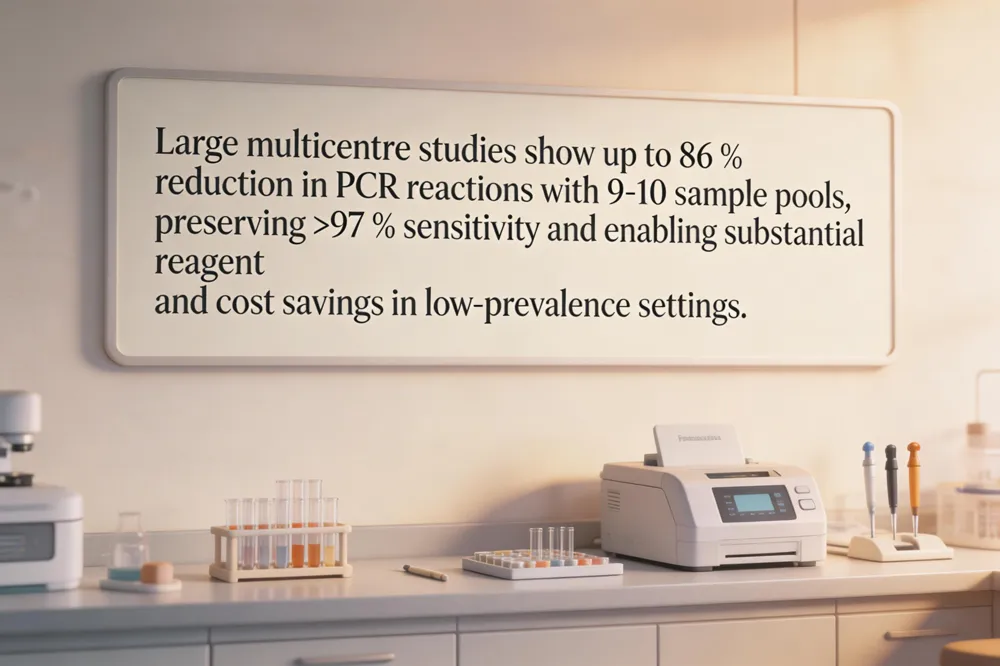
Large multicentre evaluations of SARS‑CoV‑2 RT‑PCR testing have demonstrated dramatic reductions in assay workloads when samples are pooled. In Spain, a multicentre study of 3,519 nasopharyngeal swabs processed in pools of nine‑to‑ten specimens saved 2,167 PCR reactions—a 86 % decrease in the number of tests required—while maintaining a pooled‑testing sensitivity of 97.1 % (major discordances only) and 100 % specificity. Mathematical pooling that underlie Dorfman's algorithm predict that the optimal pool size (k) can be approximated by 1/√p, where p is the prevalence. For example, at p = 0.05 (5 % prevalence), the model suggests a pool of roughly five samples (or 5‑10 samples in the empirical range); at p = 0.01 (1 %) the optimal size rises to about ten samples, matching the empirical range of 5‑10 cited in the literature. These models also show that when prevalence falls below 10 % the expected number of tests per individual drops below one, confirming the cost‑effectiveness of pooling. Agam Diagnostics in Madurai has already adopted validated pooling protocols on its NABL‑ and ICMR‑accredited automated platform. By implementing ten‑sample pools in low‑prevalence community screenings, the laboratory has achieved test‑reduction savings comparable to the reported 86‑86 % range, conserving reagents, lowering per‑sample costs, and preserving rapid turnaround times for the majority of negative pools.
Balancing Sensitivity and Dilution Effects
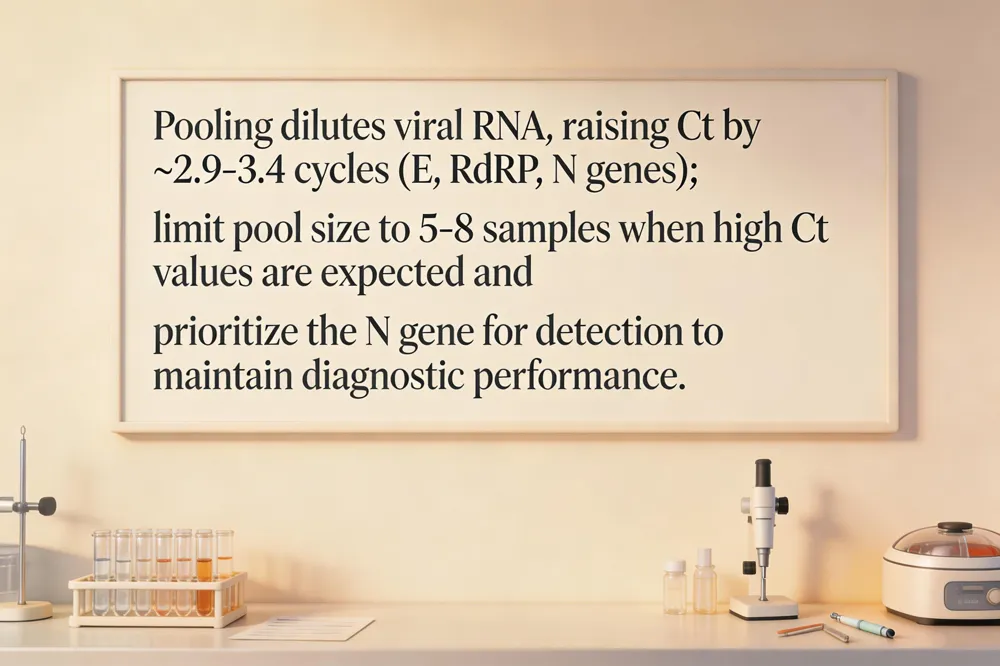
Pooling nasopharyngeal specimens dilutes viral RNA and shifts the cycle‑threshold (Ct) values upward. In the multicentre Spanish study observed median Ct increases of 2.87 cycles for the E gene, 3.36 cycles for RdRP, and 2.99 cycles for the N gene when 9–10 samples were combined, reflecting a dilution factor of roughly ten‑fold. This Ct elevation is most problematic for specimens that already have high Ct values (>35), which correspond to low viral loads or non‑viable virus. In such cases the pooled reaction may fall below the assay’s limit of detection, producing false‑negative results. To preserve sensitivity, laboratories can (i) limit pool size to 5–8 samples when prevalence is <5 % and Ct values are expected to be high, (ii) select the most robust target (the N gene showed the smallest Ct shift) for primary detection, (iii) validate the limit of detection for each platform using contrived pools, and (iv) employ automated liquid‑handling to ensure precise volume mixing and reduce variability. When prevalence rises or Ct trends indicate many low‑viral‑load cases, de‑escalating to smaller pools or individual testing should be instituted to avoid loss of diagnostic performance.
Determining the Optimal Pool Size for Local Prevalence
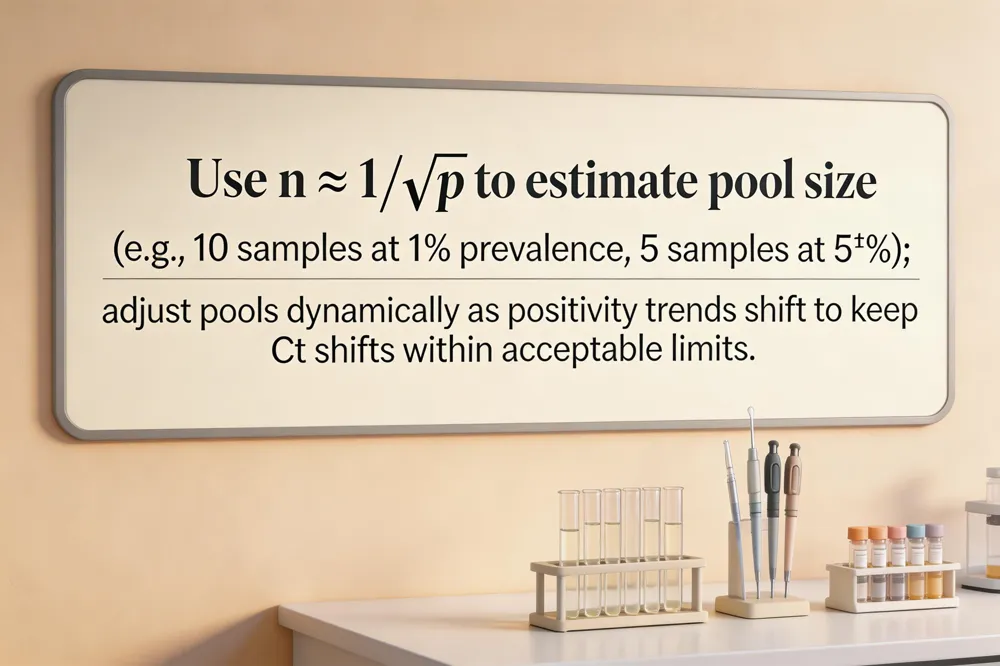
Effective sample pooling hinges on the current prevalence of SARS‑CoV‑2 in the community. International guidance from the CDC, ICMR and WHO recommends pool sizes of 5–10 specimens when the positivity rate is below 10 % with smaller pools (4–5 samples) preferred as prevalence approaches 5 % to preserve sensitivity. In practice, laboratories should monitor daily positivity trends and adjust the pool size in real time; for example, a sustained positivity of ≤2 % enables a pool of ten, while a rise to 6–8 % warrants reducing the pool to five. This dynamic approach ensures the dilution‑induced Ct shift (≈2–3 cycles for pools of nine–ten) does not push low‑viral‑load samples (Ct > 35 below the assay’s limit of detection. Implementing a simple prevalence calculator—using the formula n ≈ 1/√p (where p is the positivity rate)—allows rapid estimation of the optimal pool size, supporting laboratories such as Agam Diagnostics in Madurai to balance reagent savings (up to 86 % reduction with diagnostic accuracy (≥97 % sensitivity when major discordances are excluded.
Automation: From Manual Mixing to Robotic Precision
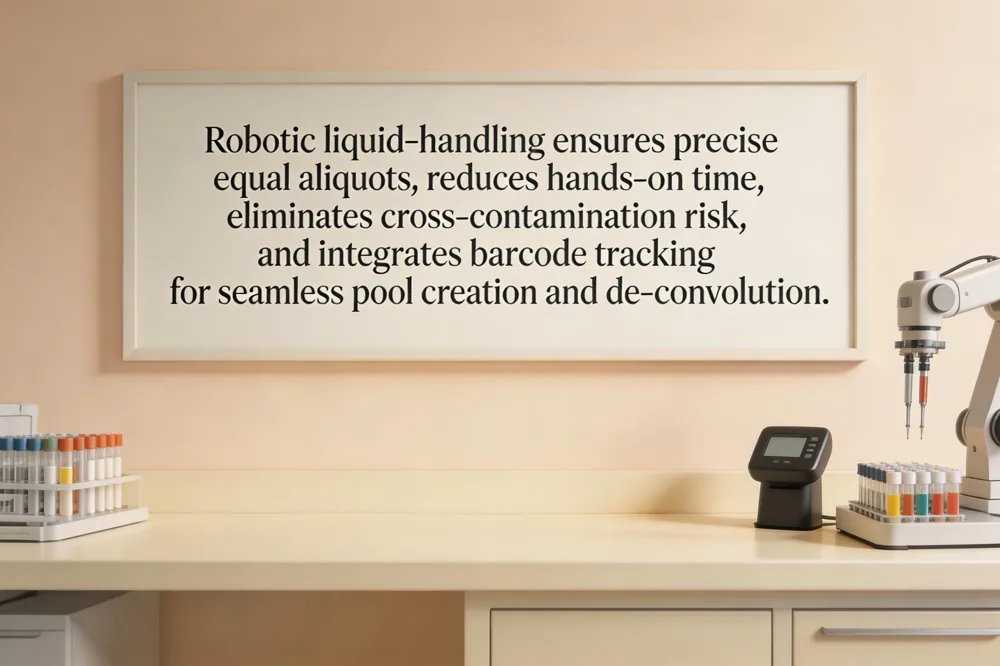
Liquid‑handling robots dramatically improve the efficiency of large‑scale SARS‑CoV‑2 pooled testing by precisely dispensing equal aliquots from each individual specimen, eliminating the manual pipetting steps that increase hands‑on time and the risk of cross‑contamination. In the multi‑centre Spanish study, manual pooling saved 86 % of PCR reactions but authors noted that automation would further improve workflow consistency; robotic platforms can replicate this saving while maintaining the same high diagnostic performance across a variety of extraction and amplification systems (Maxwell RSC, m2000sp, MagMAX, eMAG, STARMag, cobas.
Agam Diagnostics in Madurai already operates a fully automated pathology line that integrates robotic sample processors, barcode‑driven Laboratory Information Systems (LIS) and high‑throughput RT‑PCR instruments. By configuring the robots to create pools of 5‑10 nasopharyngeal lysates before nucleic‑acid extraction, Agam can preserve its rapid 24 h turnaround while conserving reagents and reducing per‑sample cost, consistent with NABL and ICMR accreditation requirements.
Barcode tracking for each specimen prior to pooling ensures traceability: every aliquot is linked to a unique identifier, allowing instant de‑convolution of any positive pool without manual record‑keeping. This reduces human error, maintains chain‑of‑custody, and supports real‑time monitoring of Ct‑value shifts, thereby safeguarding sensitivity even when dilution raises Ct by ~2‑3 cycles. Automated pooling thus offers a scalable, error‑resilient solution for expanding COVID‑19 surveillance in low‑prevalence settings.
Regulatory Landscape and Validation Requirements
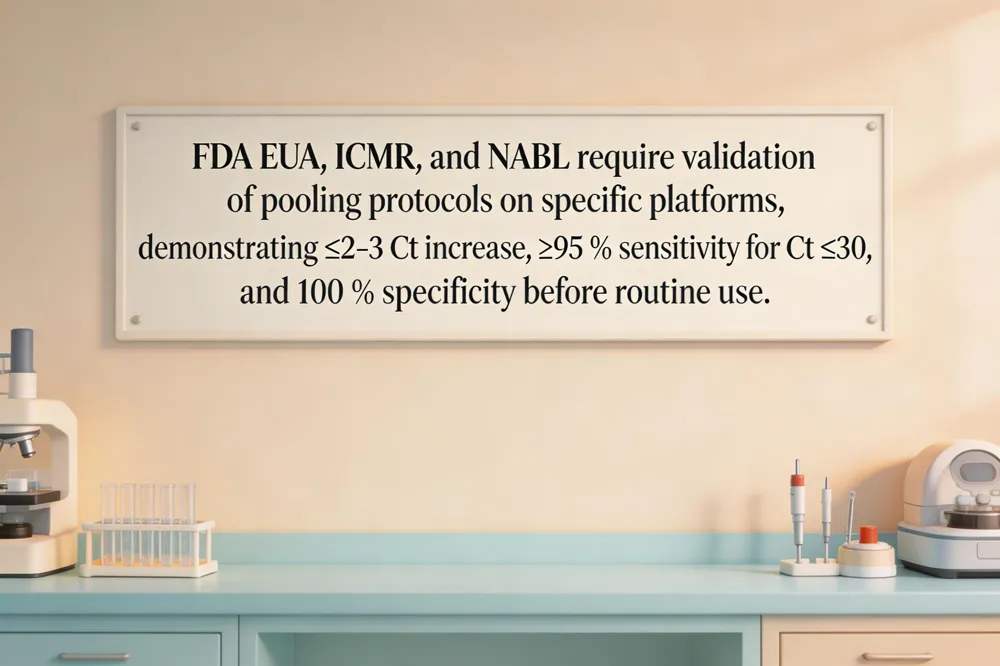
The United States FDA granted Emergency Use Authorization (EUA) for several RT‑PCR assays to be used with pooled SARS‑CoV‑2 specimens on 18 July 2020, stipulating that laboratories must follow the manufacturer’s instructions and document a validation that demonstrates acceptable loss of sensitivity when samples are pooled (CDC interim guidance, July 2020). In India, the ICMR and NABL accreditation frameworks require that any pooling protocol be validated on the specific extraction‑amplification platform in use, with evidence that the limit of detection (LoD) remains within regulatory limits (typically a ≤2‑3 Ct increase for pools of 5‑10 samples). Validation steps include: (1) creating contrived pools with known positive and negative samples across a range of Ct values (especially high‑Ct > 35 specimens); (2) confirming that pooled testing retains ≥95 % sensitivity for Ct ≤ 30 and ≥85 % overall sensitivity, as reported in multicentre studies of 9‑10‑sample pools; (3) establishing that specificity remains 100 % and that internal controls (e.g., RNase P) are detected in every pool; (4) documenting the Ct shift (median 2.9–3.4 cycles and setting a Ct cut‑off (e.g., < 35) for reflex testing; and (5) integrating barcode‑driven sample tracking and automated liquid‑handling to meet both FDA and NABL quality‑control requirements. Once these data are compiled, the laboratory can submit its validation package to the FDA (if operating under EUA) and to the ICMR/NABL for ongoing compliance, ensuring that pooled testing can be deployed safely and efficiently in low‑prevalence settings.
Quality Control and Monitoring in Pooled Testing
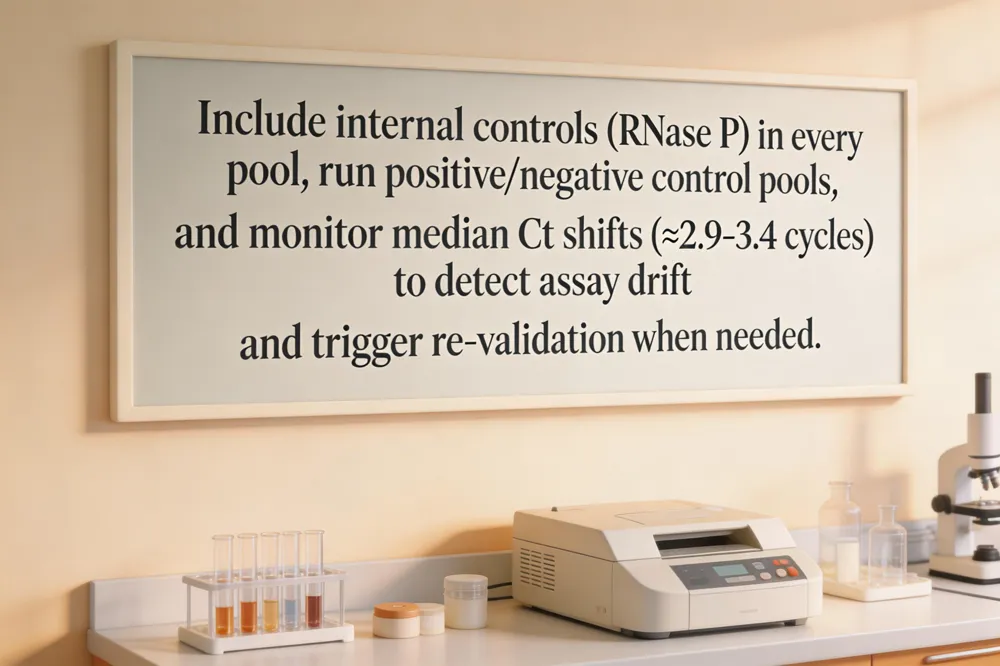
Robust quality control (QC) is essential when implementing SARS‑CoV‑2 pooled RT‑PCR to preserve the high sensitivity reported in multicentre studies (97% + when major discordances are excluded). Each pool must contain an internal extraction control such as RNase P to confirm specimen integrity and nucleic‑acid recovery, and laboratories should run dedicated positive and negative control pools alongside patient pools. Monitoring the cycle‑threshold (Ct) values of the pooled E, RdRP and N genes provides an early warning of assay drift; the Spanish multicentre study observed a median Ct increase of 2.9–3.4 cycles after pooling, so any systematic rise beyond this window should trigger investigation. Periodic re‑validation using contrived pools with known low‑viral‑load positives (Ct > 35) is recommended to verify that the assay retains acceptable detection limits, especially as prevalence shifts and pool sizes are adjusted. Automated labs such as Agam Diagnostics can integrate these QC steps into their laboratory information system, ensuring traceability, rapid flagging of out‑of‑range Ct trends, and compliance with NABL/ICMR accreditation requirements.
Economic Impact: Cost Savings and Resource Conservation
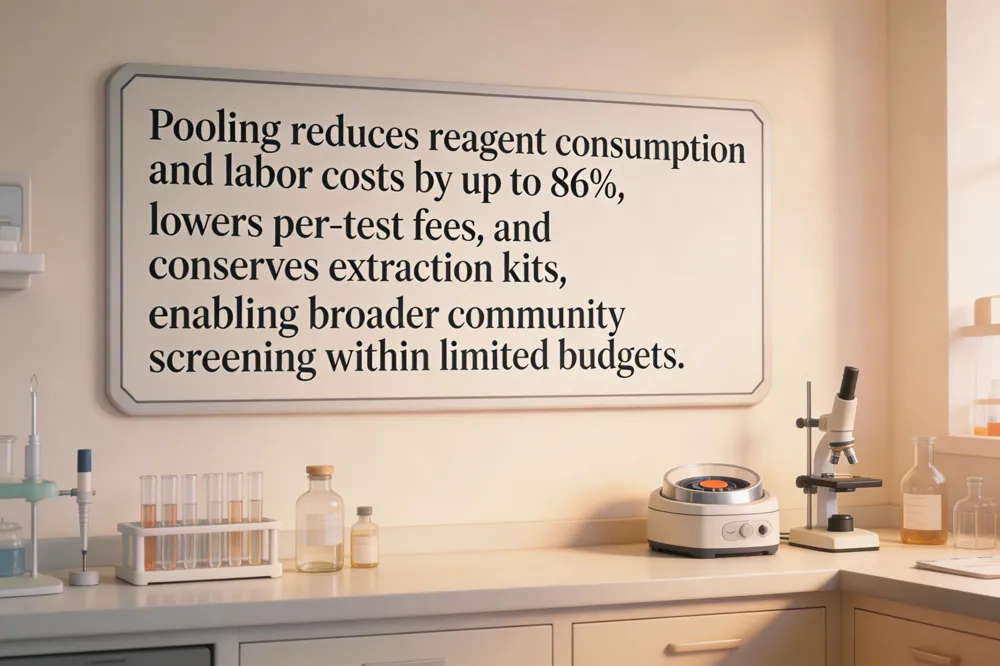
Sample pooling dramatically cuts reagent consumption, with a multicentre Spanish study reporting an 86 % reduction in PCR reactions (2,167 tests saved out of 3,519 samples) when 9‑10 specimens were pooled Pooling 9‑10 nasopharyngeal samples reduces PCR reactions by up to 86% in low‑prevalence settings. This translates into a proportional drop in per‑sample reagent cost, preserving scarce extraction kits and consumables during shortages. Labor expenses also decline because fewer pipetting steps and runs are required; automation of pool creation further trims hands‑on time and minimizes error‑related re‑work. For patients, the lowered per‑test cost can be reflected in reduced fees, enhancing accessibility in low‑income settings. Public‑health budgets benefit from the same economies of scale—fewer reagents, reduced waste, and faster turnaround enable wider community screening without proportionally higher spending. In low‑prevalence environments (≤5‑10 % positivity), the combined effect of reagent, labor, and consumable savings makes pooled RT‑PCR a Pooling recommended for low‑prevalence settings as cost‑effective, high‑efficiency screening strategy that expands testing capacity while preserving financial resources.
Turnaround Time: Speeding Up Negative Results While Managing Positive Pools
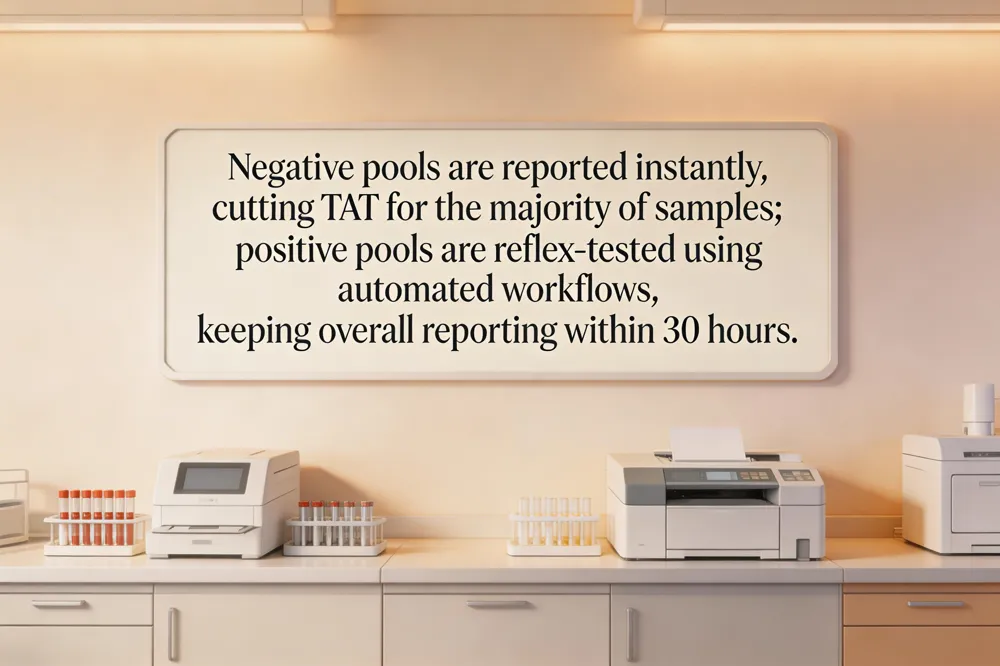
In a pooled‑testing workflow, a negative pool is reported immediately, allowing all individuals in that pool to be cleared without further analysis. This rapid reporting cuts the majority of turnaround time (TAT) because only a single RT‑PCR run is needed for the pool. When a positive pools tests positive, the laboratory must de‑convolute the sample set by individually retesting each constituent specimen. Automation of the pre‑analytical step—robotic aliquoting, barcode‑driven tracking, and integrated laboratory information systems—minimises hands‑on time and prevents human error, thus limiting the additional TAT for positive pools to a few hours. At Agam Diagnostics, the automated platform processes pooled nasopharyngeal swabs and can deliver negative results within 12‑24 hours, while positive pools are de‑convoluted and reported within an extra 4‑6 hours, keeping the overall reporting time well under 30 hours for all cases. This balance maximises testing throughput and maintains rapid turnaround for the bulk of samples, even as positive pools require a brief second‑round analysis.
Implementation Blueprint for Agam Diagnostics
Step‑by‑step SOP
- Sample receipt & accession – Upon arrival, each nasopharyngeal swab is assigned a unique barcode and logged into the laboratory information management system (LIMS). Specimens are stored at 4 °C and processed within 24 h.
- Inactivation & aliquoting – Samples are placed in lysis buffer under a Class II biosafety cabinet. An aliquot (≈50 µL) from each sample is transferred to a 96‑well plate using the robotic liquid‑handling platform, preserving a backup for de‑convolution.
- Pooling – Automated software creates pools of 5–10 specimens based on current prevalence (<5%). The robot combines equal volumes from each barcode‑tracked sample into a single tube, mixes, and proceeds to nucleic‑acid extraction.
- Extraction & RT‑PCR – Pooled lysates are processed on validated platforms (e.g., Maxwell RSC, MagMAX, cobas). Internal controls (RNase P, positive/negative controls) are included in every pool.
- Result interpretation – A negative pool automatically reports all constituent samples as negative. Positive pools trigger an automated reflex run where each original sample is retrieved from the backup plate and re‑tested individually.
- Result reporting – Final Ct values and interpretation are uploaded to the LIMS, linked to each barcode, and transmitted securely to clinicians within 24 h.
Barcode‑driven LIMS integration – The LIMS records pool composition, tracks sample lineage, and flags positive pools for reflex testing. Real‑time dashboards display prevalence trends, allowing dynamic adjustment of pool size.
Training, biosafety & documentation – All staff complete ICMR‑NABL compliant training on biosafety (PPE, decontamination), robotic handling, and data integrity. SOPs, validation data, and QC logs are retained per regulatory requirements, ensuring traceability and audit readiness.
Future Directions: Advanced Pooling Algorithms and Non‑Adaptive Strategies
Recent advances in pooled RT‑qPCR leverage quantitative cycle‑threshold (Ct) values to recover individual viral loads without a second round of testing. Compressed‑sensing algorithms such as Gradient Descent CT (GD‑CT) and Iterative Mirrored Hard Thresholding CT (IMHT‑CT) use deterministic pooling matrices (e.g., Kirkman or Steiner triple designs) to solve for each specimen’s Ct from pooled measurements, achieving false‑positive/negative rates comparable to traditional binary pooling while reducing the number of reactions by 20–40 % in low‑prevalence settings. Multi‑stage approaches—Dorfman’s two‑stage method combined with matrix (row‑column) pooling—further improve efficiency when prevalence falls below 1 %, allowing a single test to screen up to 30 samples and limiting de‑convolution to a small subset of positive pools. These strategies align well with Agam Diagnostics’ fully automated, NABL‑ and ICMR‑accredited workflow. The laboratory’s robotic liquid‑handling and barcode‑driven LIMS can generate the required pooling matrices, perform high‑volume extraction, and automatically trigger reflex testing for positive pools, thereby preserving rapid turnaround (<24 h) while capitalizing on the cost‑ and throughput gains of quantitative, non‑adaptive pooling.
Putting It All Together – A Path Forward for Scalable, Accurate Testing
Low‑prevalence settings (≤5 % positivity) allow pools of 5‑10 specimens to cut reagent use by 70‑86 % while retaining >95 % sensitivity when Ct values are ≤30. Because pooling raises Ct by ~2‑3 cycles, laboratories must validate the limit of detection for each assay and restrict pool size when high‑Ct (low‑viral‑load) cases are expected. Continuous monitoring of community prevalence enables dynamic adjustment of pool size—shrinking pools as positivity climbs above 5 % to avoid loss of diagnostic confidence. Automation is the linchpin: liquid‑handling robots create reproducible pools, barcode‑driven LIMS track specimens, and integrated de‑convolution workflows preserve rapid turnaround (<24 h). Together, these practices let Agam Diagnostics expand testing capacity, lower costs, and maintain the high accuracy required for public‑health surveillance.