Setting the Stage for a Diagnostic Revolution
2026 will see a diagnostic revolution driven by artificial intelligence, genomics and streamlined operations. AI moves beyond decision‑support to become a partner that interprets images, flags abnormal lab trends and predicts disease risk, while multi‑omics platforms deliver personalized insights from DNA, proteins and metabolites. At the same time, labs are automating sample handling, using high‑throughput analyzers and integrated LIS to cut turnaround times and reduce human error. In India, Agam Diagnostics in Madurai exemplifies this shift. Its fully automated workflow, free home‑collection service and NABL‑ICMR accreditation ensure rapid, reliable results for patients in remote areas. The laboratory’s AI‑assisted hematology and digital pathology, next‑generation sequencing panels, and liquid‑biopsy capabilities align with global trends toward precision medicine and decentralized testing. Together, these innovations promise faster, more accurate, and patient‑centric diagnostics that will reshape clinical decision‑making worldwide. Clinicians will benefit from real‑time data integration, while patients enjoy quicker answers and personalized care pathways.
AI Evolves from Decision‑Support to True Diagnostic Partner
By 2026 artificial intelligence is moving beyond flagging abnormal values to becoming an active diagnostic collaborator in clinical laboratories. Advanced deep‑learning models now interpret whole‑slide images, analyze complex molecular signatures, and fuse multimodal data—imaging, laboratory results, and electronic health records—to generate preliminary diagnoses that clinicians can validate. In pathology, AI‑assisted image analysis can cut turnaround time by up to 30 % and improve detection of subtle morphological changes, as demonstrated in fully automated labs such as Agam Diagnostics in Madurai, which integrates AI‑driven slide analysis into its accredited workflow. Predictive analytics further flag patients at risk before disease manifests, supporting earlier interventions and personalized care. Explainable AI models provide transparent rationale for their recommendations, building clinician confidence and fostering a partnership rather than a replace‑and‑supervise model. Together with robust data governance, interoperability standards, and compliance with NABL and ICMR, AI is transforming laboratories from decision‑support hubs into true diagnostic partners that enhance accuracy, speed, and patient outcomes.
Data Governance, Interoperability and Regulatory Compliance
Robust Data governance has become a strategic imperative for clinical laboratories that are integrating AI and other digital tools. Standardized exchange formats such as HL7 FHIR enable seamless transmission of test orders, results, and metadata between laboratory information systems (LIS), electronic health records (EHR), and patient‑facing portals, reducing manual transcription errors and accelerating turnaround times. Security protocols—encryption at rest and in transit, role‑based access controls, and immutable audit trails—protect sensitive health information and satisfy regulatory mandates, including India’s ICMR guidelines and international frameworks like HIPAA and GDPR. To stay ahead of emerging Software‑as‑a‑Medical‑Device (SaMD) regulations, labs are forging deep partnerships with technology vendors, ensuring AI models are continuously validated, bias‑free, and transparent. Effective Data governance not only safeguards privacy but also enhances the reliability and clinical utility of AI‑driven diagnostics, supporting faster, more accurate patient care.
Multi‑omics and Personalized Diagnostics
Genomics, proteomics, metabolomics and mass‑spectrometry are converging to create truly personalized diagnostics. In India, high‑throughput next‑generation sequencing (NGS) has fallen below $100 per genome, making comprehensive genomic profiling affordable for inherited‑disease screening and cancer genomics across both urban and rural populations. Parallel advances in proteomic profiling using high‑resolution mass spectrometry add a functional layer, capturing disease‑specific protein signatures and post‑translational modifications that complement DNA‑level information. Metabolomic analyses, often coupled with liquid chromatography‑mass spectrometry, further illuminate biochemical pathways perturbed in disease states, enabling clinicians to monitor treatment response and predict progression with unprecedented precision. Integrated platforms now fuse these multi‑omics datasets with AI‑driven analytics, employing machine‑learning models to identify patterns, prioritize actionable biomarkers, and generate individualized therapeutic recommendations. Such AI‑augmented, multi‑omics pipelines are becoming the backbone of precision‑medicine workflows, supporting companion‑diagnostic development, patient‑selection for clinical trials, and real‑time clinical decision support while maintaining compliance with NABL and ICMR quality standards.
Liquid Biopsy Advances and AI‑Enhanced Filtering
Liquid biopsy is emerging as a minimally invasive cornerstone for cancer diagnostics, capturing circulating tumor DNA (ctDNA) and other tumor‑derived molecules from a simple blood draw. Recent improvements in assay design—such as ultra‑deep sequencing, molecular barcoding, and optimized fragment size selection—have lowered detection limits, allowing identification of low‑frequency tumor signals that were previously obscured by background genomic noise. The true breakthrough comes from artificial‑intelligence‑driven bioinformatic pipelines that filter these signals with unprecedented precision, distinguishing true ctDNA variants from technical artifacts and benign somatic mutations. By integrating AI‑enhanced liquid biopsy data with conventional pathology and imaging results, clinicians obtain a comprehensive, longitudinal view of disease dynamics. This synergy enables earlier detection of cancers such as lung, breast, and prostate, real‑time monitoring of therapeutic response, and sensitive assessment of minimal residual disease, ultimately guiding more personalized and timely treatment decisions.
Patient‑Driven Diagnostics: Wearables, Connected Health and Home Collection
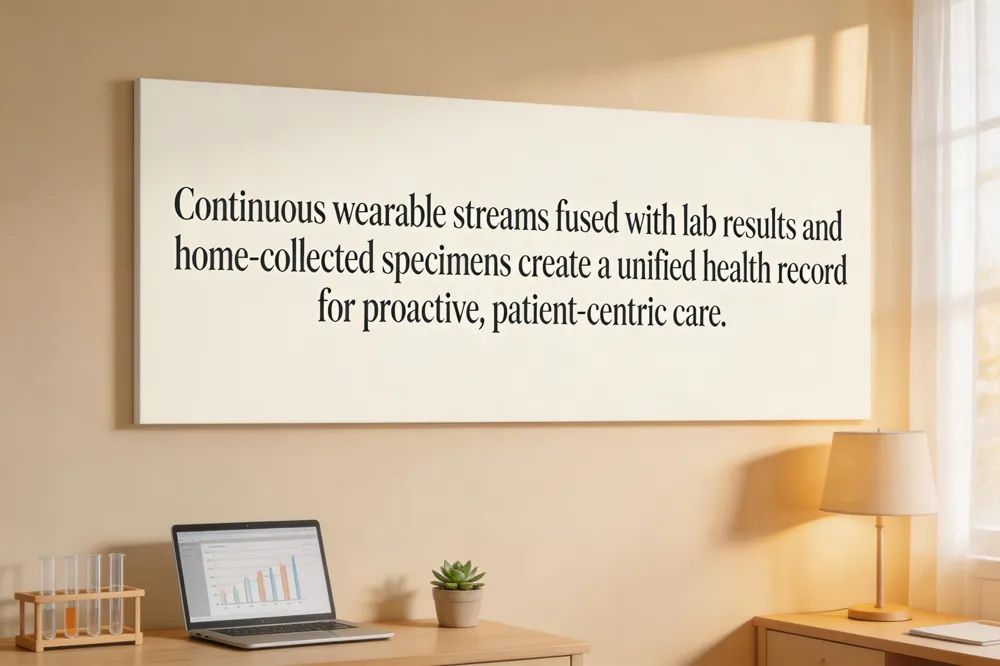
Wearable sensors and connected‑health platforms are turning every moment into a diagnostic opportunity. Devices that continuously record heart rate, blood glucose, oxygen saturation, ECG patterns and other physiological signals generate streams of digital biomarkers that can be uploaded in real time to laboratory analytics engines. At the same time, free home‑collection services—exemplified by Agam Diagnostics in Madurai—bring blood, urine and swab specimens directly to a fully automated, NABL‑ and ICMR‑accredited laboratory, eliminating the need for patients to travel and improving sample‑submission compliance. By fusing wearable‑derived longitudinal data with traditional laboratory results, clinicians obtain a unified health record that highlights trends, detects early disease signals and supports proactive care pathways. This convergence shifts diagnostics from episodic, clinic‑bound testing to continuous, patient‑centric monitoring, enabling earlier interventions, personalized therapeutic decisions and more efficient use of laboratory resources.
Operational Efficiency Through Automation and Ready‑to‑Use Panels
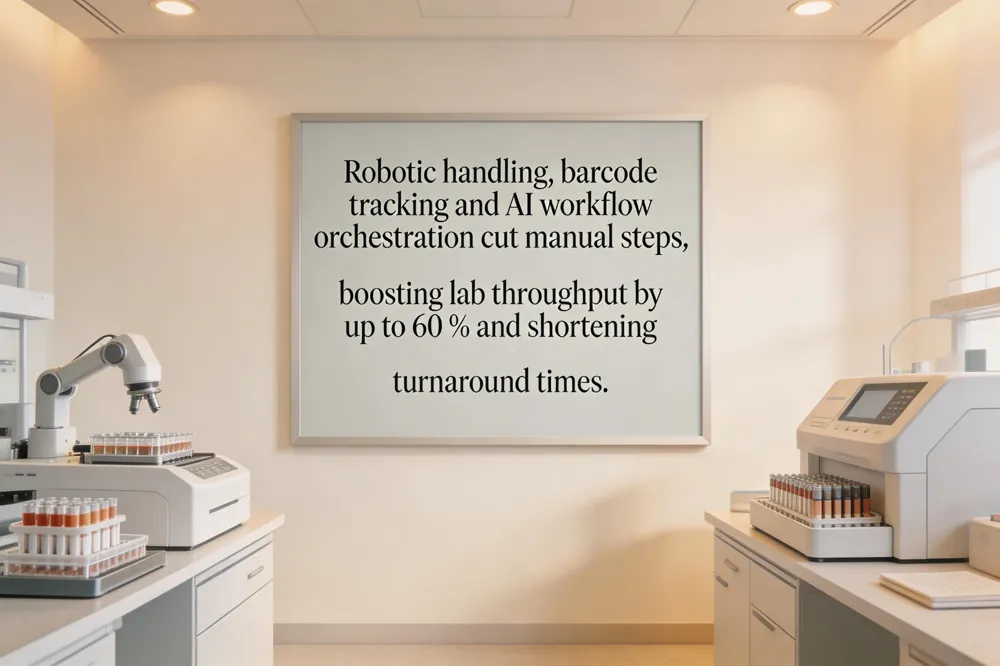
Automation has become a cornerstone of quality in modern clinical laboratories. Fully automated sample‑handling stations, high‑throughput analyzers and ready‑to‑use PCR panels eliminate repetitive manual steps, thereby reducing human error and freeing staff for higher‑value tasks. Robotic pipetting, barcode‑driven specimen tracking and AI‑guided workflow orchestration enable continuous 24/7 processing, collapsing bottlenecks that traditionally extended turnaround times. Laboratories that have deployed these technologies report up to a 60 % increase in overall efficiency and markedly faster result delivery. Multiplex testing and modular, composable specialist modules further streamline operations by integrating seamlessly with existing electronic health record (EHR) and payer systems, automating report generation, billing and data exchange.
How does automation improve turnaround times in clinical labs? By minimizing manual handling, automating barcode‑based sample identification and allowing instruments to run uninterrupted around the clock, automation cuts the latency between specimen receipt and result reporting, delivering faster, more reliable diagnostics even under staffing pressures.
Lab‑Biopharma Partnerships and Companion Diagnostics
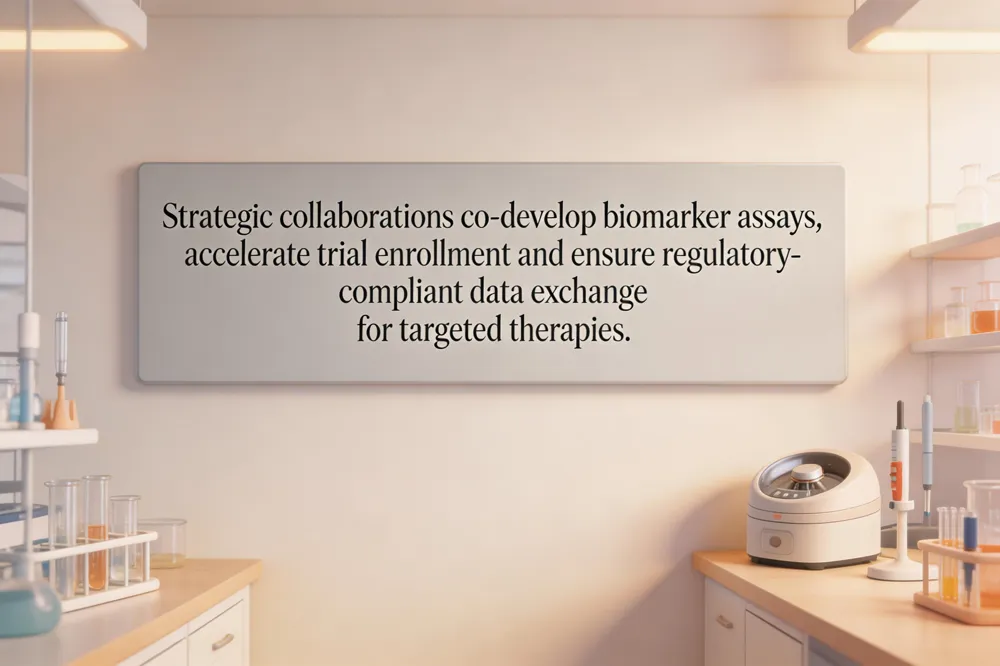
By 2026 clinical laboratories are becoming strategic partners for biopharma companies, co‑creating companion diagnostics that identify the patients most likely to benefit from targeted therapies. These collaborations shorten drug‑development timelines by delivering real‑world biomarker evidence early, streamlining patient enrollment in clinical trials, and supporting precision oncology and emerging metabolic treatments such as GLP‑1‑based therapies. Laboratories equipped with multi‑omics platforms—genomics, proteomics, mass‑spectrometry—and advanced liquid‑biopsy capabilities generate the high‑resolution molecular data required for modern companion diagnostic assays. Integrated data‑governance frameworks, built on interoperable standards (HL7/FHIR) and robust security, ensure regulatory compliance (NABL, ICMR, FDA) while facilitating seamless data sharing across sponsors, regulators, and clinicians. Indian examples like Agam Diagnostics, which offers automated haematology, immunology, molecular biology, and genetics services, illustrate how fully automated, accredited labs can provide rapid, high‑quality biomarker profiling, reinforcing the value of lab‑biopharma partnerships in accelerating precision medicine.
Agam Diagnostics: A Real‑World Example of Emerging Trends in Action
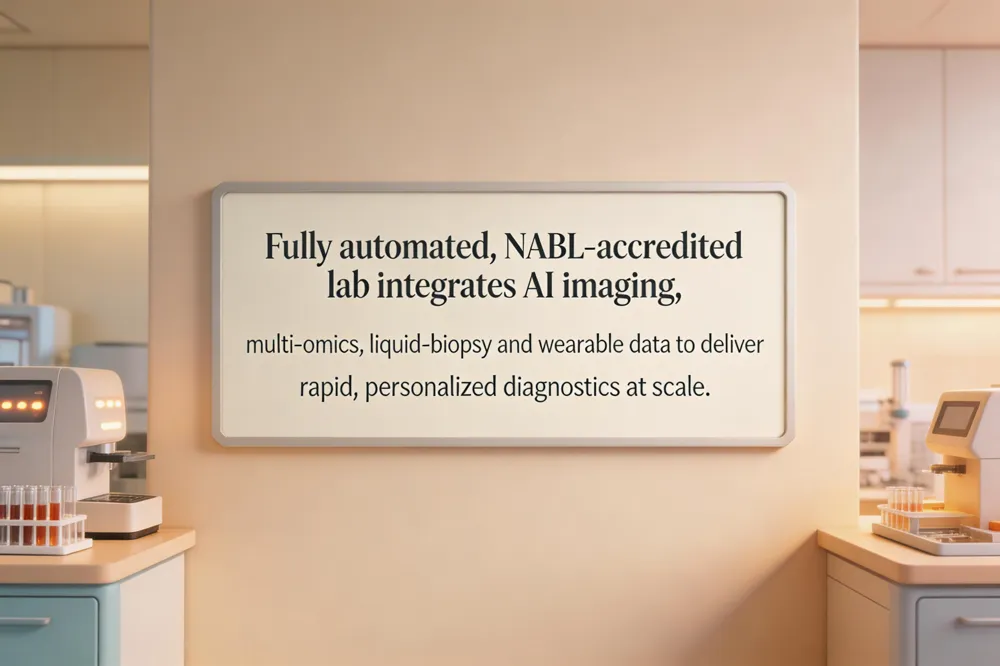
Agam Diagnostics in Madurai, Tamil Nadu illustrates how a fully automated pathology laboratory can weave together the most powerful emerging trends to deliver superior patient care. The lab provides a comprehensive menu—haematology, clinical biochemistry, immunology, microbiology, molecular biology and medical genetics—while offering free home collection and same‑day reporting. Accredited by NABL and ICMR, it meets stringent quality, data‑security and regulatory‑compliance standards. Automation platforms process more than 4,000 tests per hour, reducing manual handling and turnaround time. AI‑assisted image analysis is being piloted for hematology and pathology slides, improving diagnostic accuracy and flagging urgent cases. Multi‑omics capabilities, including next‑generation sequencing and mass‑spectrometry support personalized diagnostics, and liquid‑biopsy services are being introduced for early cancer detection. Integration with wearable data streams and a telemedicine portal creates a patient‑centric workflow that aligns with India’s National Digital Health Mission. Strategic partnerships with biopharma and technology vendors enable companion‑diagnostic development and robust data governance, demonstrating how cutting‑edge technology, governance and collaboration converge to shape the future of diagnostics.
Looking Ahead: The Promise of a Connected, AI‑Enabled Diagnostic Ecosystem
The diagnostic landscape of 2026 is being reshaped by the convergence of artificial intelligence, multi‑omics, liquid biopsy, wearable health monitoring, and advanced automation. AI is moving beyond decision‑support to act as a diagnostic partner, interpreting images, sequencing data, and real‑time sensor streams while adhering to strict data‑governance, security, and interoperability standards. Multi‑omics platforms—combining genomics, proteomics, and mass‑spectrometry—provide a precision view of disease, and liquid‑biopsy pipelines, filtered by AI, now detect tumor‑derived signals non‑invasively. Wearable biosensors continuously feed physiological data into laboratory information systems, enabling longitudinal monitoring and early intervention. Automation—exemplified by fully robotic labs such as Agam Diagnostics in Madurai—reduces manual error, speeds turnaround, and ensures consistent quality across haematology, biochemistry, microbiology, and molecular genetics. As labs integrate these technologies within interoperable, regulatory‑compliant frameworks, they deliver faster, more accurate, personalized results at scale. Ongoing collaboration among technology vendors, biopharma partners, and healthcare providers is essential to sustain momentum and guarantee equitable access to next‑generation diagnostics for all patients.