Understanding the Role of RT‑PCR in COVID‑19 Diagnosis
RT‑PCR (reverse transcription polymerase chain reaction) detects SARS‑CoV‑2 RNA by first converting viral RNA into complementary DNA and then amplifying specific gene targets (e.g., N, E, RdRp) in real‑time. The exponential amplification of these genetic fragments produces a fluorescent signal that allows detection of even minute viral loads, making RT‑PCR highly sensitive and specific—qualities that earn it the "gold‑standard" label for COVID‑19 diagnosis. Because it can identify infection early, often before symptoms peak, timely RT‑PCR results enable rapid initiation of antiviral therapy, appropriate isolation, and swift contact‑tracing. Early detection thus curtails transmission chains and improves clinical outcomes, especially for high‑risk patients who benefit most from prompt treatment.
Why RT‑PCR Remains the Gold Standard
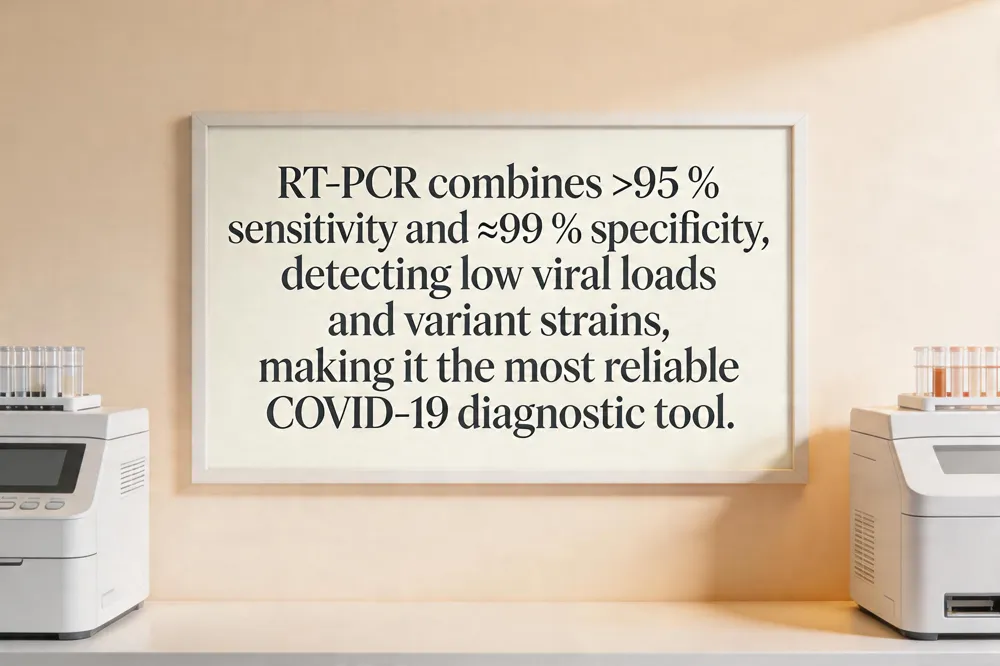
RT‑PCR testing is still considered the gold standard for COVID‑19 diagnosis because it combines very high sensitivity (≈95‑99 %) and specificity (≈99 %). Unlike rapid antigen tests, which can miss up to half of infections in asymptomatic individuals, RT‑PCR can reliably detect the virus even when viral loads are low, such as in the early days after exposure or during the tail end of infection. The assay achieves this by amplifying multiple viral gene targets—commonly the E, N, and RdRp genes(https://www.fda.gov/media/139732/download)—using primers and probes that are highly specific to SARS‑CoV‑2. Detecting at least two of these targets with a cycle‑threshold (Ct) value(https://www.fda.gov/media/139732/download below the assay‑specific cutoff confirms infection and also allows laboratories to report Ct values, which correlate with viral load and help assess contagiousness. Importantly, RT‑PCR platforms can incorporate variant‑specific probes(https://www.fda.gov/media/139732/download or be followed by sequencing of the amplified product, enabling rapid identification of emerging variants of concern. This capacity supports public‑health surveillance and informs treatment decisions, such as the use of monoclonal antibodies that may be ineffective against certain mutations. Together, these technical advantages make RT‑PCR the most reliable tool for confirming current infection, guiding isolation, and monitoring the pandemic’s evolution.
Who Should Get Tested and When
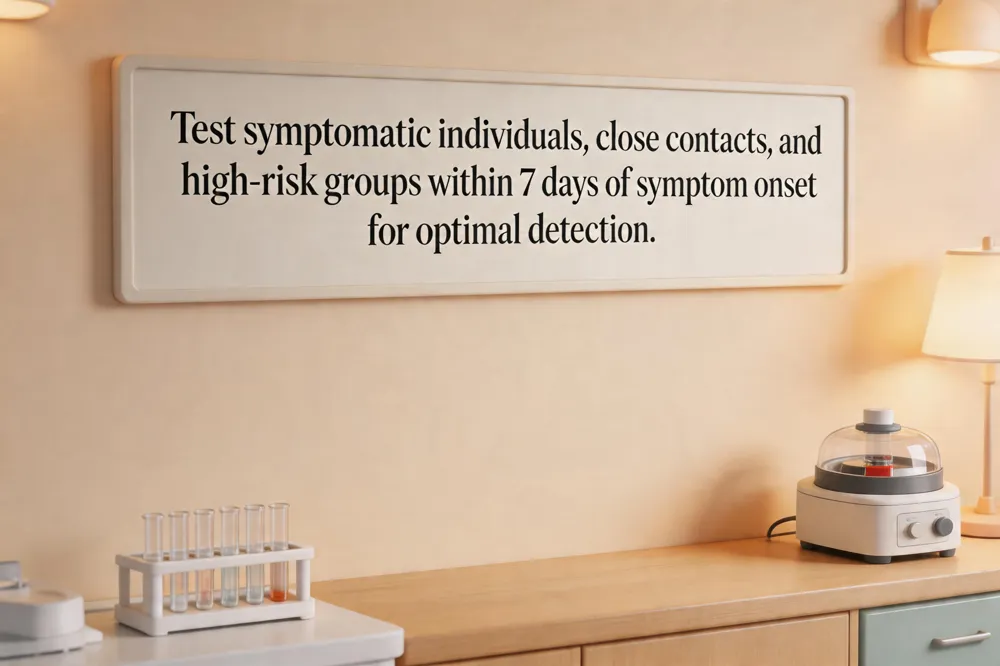
According to the Indian Council of Medical Research (ICMR) and the CDC, testing is recommended for three core groups: (1) anyone with COVID‑19 symptoms such as fever, cough or shortness of breath; (2) close contacts of a confirmed case, even if they feel well; and (3) high‑risk individuals—including people over 65, pregnant persons, those with chronic lung, heart or immunosuppressive conditions, and anyone who is immunocompromised. For all of these categories, the optimal window for specimen collection is within the first seven days after symptom onset, with the highest detection rates observed between days 2 and 7. Nasopharyngeal or oropharyngeal swabs placed in viral transport medium should be processed as soon as possible, ideally within 72 hours when stored at 2‑8 °C. Special guidance applies to people who have tested positive in the past 30‑90 days. If a positive test occurred within the last 30 days and the person remains symptomatic, an antigen test is preferred, followed by a NAAT (PCR) to confirm a negative result. For asymptomatic individuals within 31‑90 days of a prior positive, repeat antigen testing is advised, with any negative result confirmed by a PCR if clinical suspicion persists. Because NAATs can stay positive for up to 90 days due to residual viral RNA, a positive result in this period does not necessarily indicate a new infection and must be interpreted in the clinical context.
Sample Collection: Home vs. Clinic

Agam Diagnostics in Madurai offers free, fully‑protected home‑collection of COVID‑19 specimens, allowing patients to avoid travel and exposure to crowded testing sites. Trained phlebotomists follow ICMR‑approved biosafety protocols, collecting nasopharyngeal, oropharyngeal, or anterior nasal nasalabs according to the preferred specimen‑type hierarchy. For optimal RNA extraction, at least 30 µL of viral transport medium (VTM) must fill the collection tube, ensuring sufficient sample volume for downstream analysis. Once the swab is placed in VTM, it is transported in a temperature‑controlled container and delivered to a NABL‑accredited laboratory where biosafety is paramount. In the lab, all sample handling occurs within a Class II A2 biosafety cabinet, and staff wear appropriate personal protective equipment—including N95 respirators, eye protection, double gloves, gowns, and shoe covers—to prevent aerosol exposure. These stringent collection and handling practices together preserve specimen integrity, maximize test sensitivity, and protect both patients and laboratory personnel.
Understanding RT‑PCR Results and Ct Values
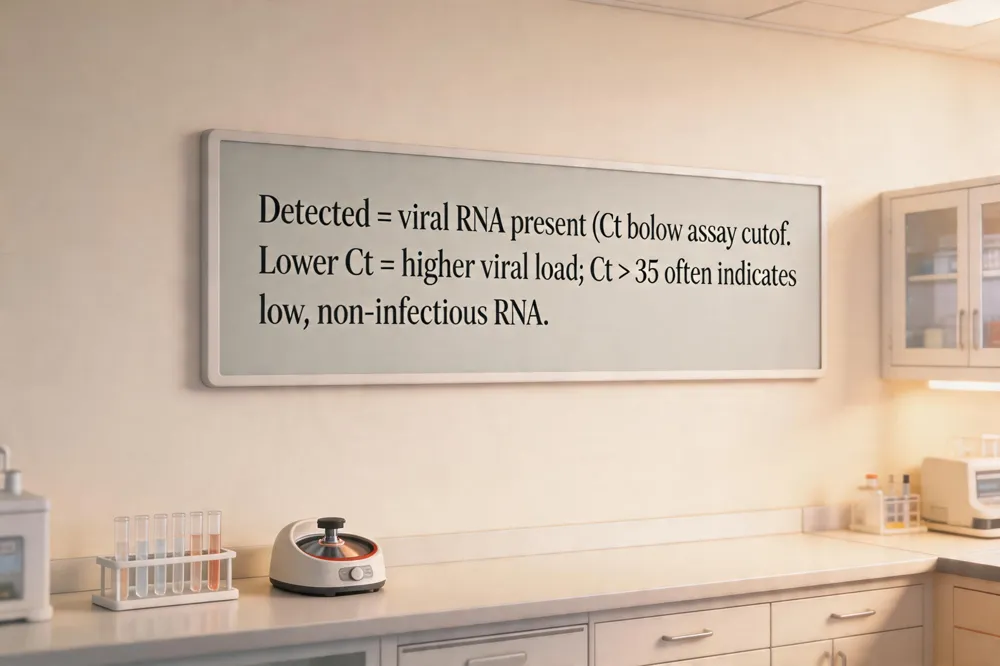
RT‑PCR reports are expressed as either “detected” (positive) or “not detected” (negative). A detected result means at least one viral gene target (e.g., N, E, RdRp) amplified with a cycle‑threshold (Ct) value below the assay‑specific cutoff, indicating the presence of SARS‑CoV‑2 RNA in the specimen. A not‑detected result implies that no viral RNA was identified, but it does not completely rule out infection if the sample was taken too early, the viral load is low, or collection was sub‑optimal.
The Ct value is the number of amplification cycles required for the fluorescent signal to cross the detection threshold. Because each cycle roughly doubles the amount of target nucleic acid, a lower Ct corresponds to a higher viral load, while a higher Ct (e.g., >35) often reflects low‑level residual RNA that may not be clinically infectious. Some laboratories report Ct values alongside the qualitative result to aid clinicians in assessing contagiousness and disease stage.
Limitations of RT‑PCR include prolonged positivity for up to 90 days after infection, as the assay can detect non‑viable viral fragments, potentially leading to false‑positive interpretations of a new infection. False‑negative outcomes can arise from early testing (before viral replication peaks), poor swab technique, inadequate viral transport medium, or degradation of RNA during storage. In such cases, repeat testing—preferably with a second NAAT or a rapid antigen test after 48 hours—is recommended, especially for symptomatic individuals or high‑risk exposures.
Guidelines for Antigen Testing and Confirmatory PCR
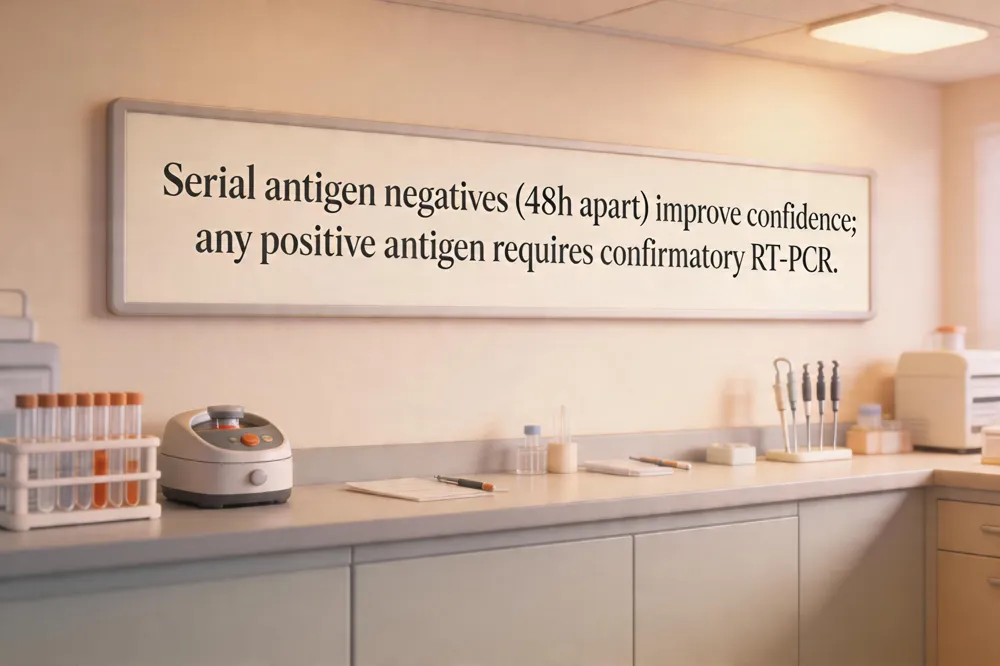
Rapid antigen tests detect SARS‑CoV‑2 proteins and deliver a result in 15‑30 minutes, but their sensitivity is lower than that of nucleic‑acid‑amplification tests (NAATs) such as RT‑PCR. NAATs are considered the "gold‑standard" because they can identify the virus even when the viral load is low, whereas antigen tests are most reliable within the first 7 days of symptom onset and may miss up to 15 % of true infections, especially in asymptomatic individuals.
The U.S. FDA advises serial antigen testing to improve confidence in a negative result. For anyone with COVID‑19 symptoms, two negative antigen tests taken at least 48 hours apart are required before concluding that infection is unlikely. For asymptomatic people who have been exposed or are being screened, three consecutive negative antigen results, each spaced 48 hours apart are recommended. This staggered approach compensates for the lower sensitivity by providing multiple chances to detect the virus as its load fluctuates.
When an antigen test returns a positive result, the FDA permits a single NAAT—most commonly a PCR assay—to be used as confirmatory testing. A positive NAAT confirms the infection, allowing the individual to isolate, begin appropriate treatment, and initiate contact‑tracing. This confirmatory step is especially important when the antigen test is performed in settings with high stakes, such as travel clearance or before surgical procedures.
Cost, Accessibility, and Accreditation at Agam Diagnostics
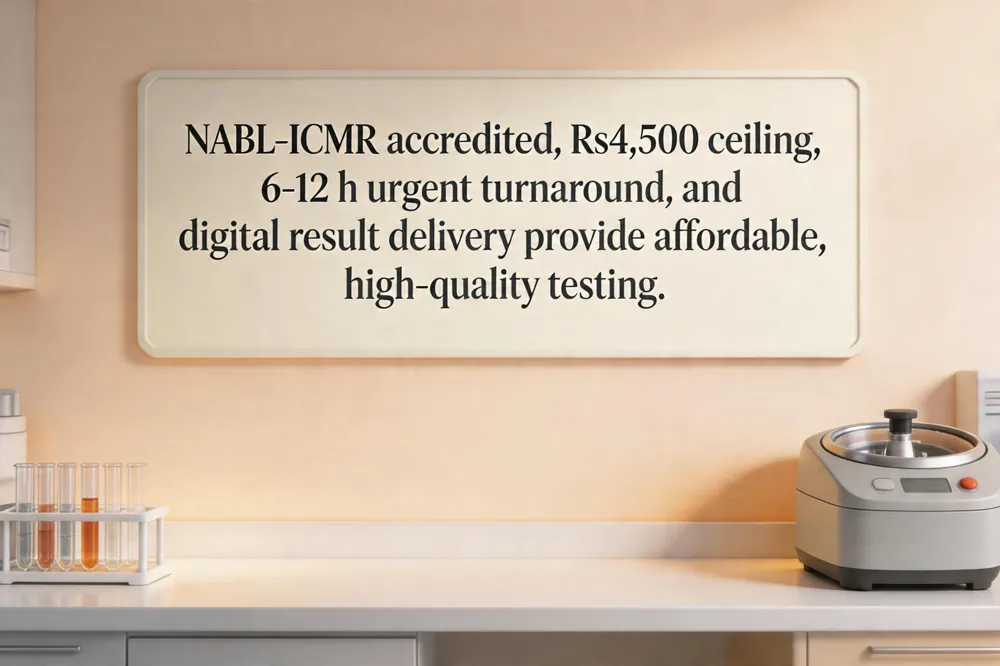
Agam Diagnostics in Madurai, Tamil Nadu, operates under both NABL and ICMR accreditation, guaranteeing that every RT‑PCR assay follows validated protocols, includes internal controls (e.g., RNase P, and meets strict traceability standards. This dual accreditation assures patients that test results are reliable, reproducible, and aligned with national public‑health reporting requirements. The Indian Council of Medical Research caps the cost of a COVID‑19 screening test at Rs 4,500, and many private labs, including Agam Diagnostics, adhere to this ceiling while offering subsidies or free testing for eligible individuals, thereby reducing financial barriers to care. Turnaround time is a key differentiator: urgent samples are processed in 6–12 hours, while routine batches are delivered within 24 hours, often earlier, thanks to the laboratory’s fully automated workflow. Results are transmitted digitally via SMS, email, or the lab’s portal, enabling rapid isolation, contact‑tracing, and treatment decisions. Together, accreditation, cost controls, and swift electronic reporting make Agam Diagnostics a model of accessible, high‑quality COVID-19 testing in India.
Preparing for Travel and Post‑Positive Care
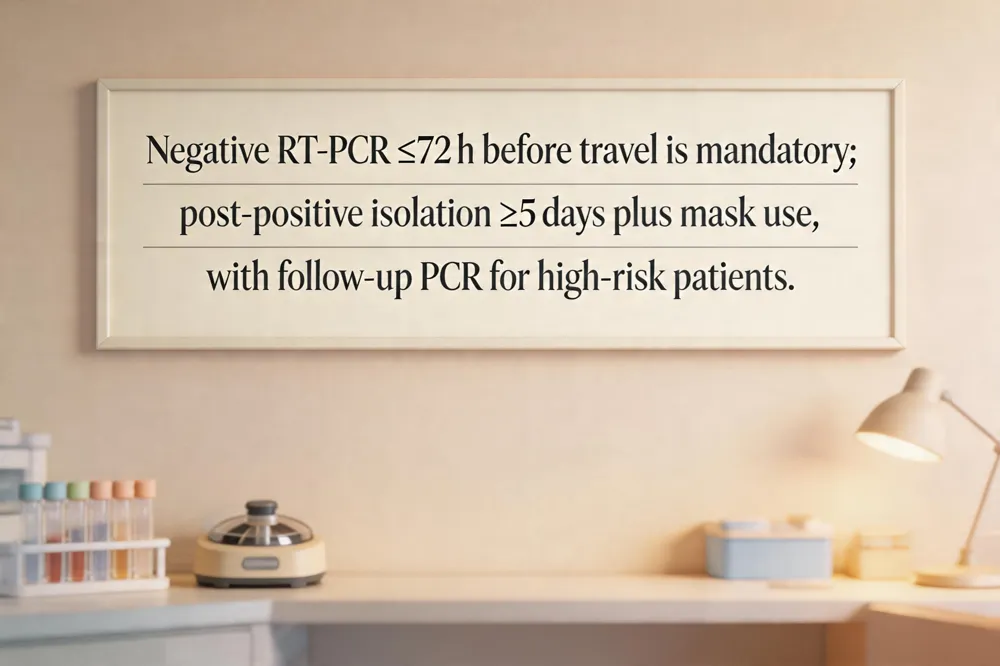
International travelers to and from India must present a negative RT‑PCR test performed within 72 hours of departure or arrival as mandated by the Ministry of Health and Family Welfare and the Ministry of Civil Aviation. The test should be a laboratory‑based NAAT (PCR) using a nasopharyngeal or nasal swab placed in viral transport medium, and the result must be digitally signed and uploaded to the Air Suvidha portal. Once a COVID‑19 infection is confirmed, isolation is required for at least five days from the onset of symptoms (or from the date of the positive test if asymptomatic). After the five‑day period, individuals must continue to wear a well‑fitted high‑filtration mask (N95/KN95) for an additional five days when in public or around others, and they should be fever‑free for 24 hours without antipyretics before ending isolation. High‑risk patients—those over 60, with comorbidities, immunosuppression, or pregnancy—should undergo follow‑up RT‑PCR testing 48–72 hours after the initial positive result to assess viral clearance and guide treatment decisions. If the follow‑up test remains positive but the Ct value is high (e.g., >35), clinicians may consider the patient’s clinical status and time since onset before extending isolation. Repeat testing is also advised if symptoms worsen or if the patient is being considered for antiviral therapy, which is most effective when started within the first five days of symptom onset. All test results, including follow‑up PCRs, should be reported promptly to the relevant health authorities to facilitate contact tracing and public‑health surveillance.
Putting It All Together: Your Path to Accurate COVID‑19 Diagnosis
RT‑PCR (a NAAT) remains the gold‑standard for confirming COVID‑19 because of its high sensitivity and ability to detect low viral loads; it is preferred for symptomatic patients, close contacts, and pre‑travel clearance. Antigen tests give rapid 15‑30‑minute results and are useful for quick screening, but they miss up to half of asymptomatic infections and should be confirmed with a repeat antigen or a PCR if symptoms persist. Agam Diagnostics simplifies both approaches by offering free, professionally‑collected home swabs (nasopharyngeal or anterior nasal) that are sent to its NABL‑ and ICMR‑accredited laboratory for RT‑PCR, with most results returned within 24‑48 hours. Follow the public‑health guidance—self‑isolate, monitor symptoms, and repeat testing when recommended—to ensure safe recovery and protect your community.