Introduction
Microbiology laboratories handle live pathogens that can cause serious infections if proper safety measures are ignored; therefore a robust safety culture is essential to protect personnel, patients, and the community. At Agam Diagnostics in Madurai, where the hot, humid climate encourages rapid microbial growth, strict adherence to biosafety practices minimizes the risk of laboratory‑acquired infections and cross‑contamination of clinical specimens. The laboratory’s procedures are designed to satisfy both NABL (National Accreditation Board for Testing and Calibration Laboratories) and ICMR (Indian Council of Medical Research) accreditation requirements, which demand documented training, use of certified biological safety cabinets, regular decontamination, and immediate reporting of spills or injuries. By integrating these national standards with local operational needs, Agam Diagnostics assures reliable diagnostic results while maintaining a safe working environment.
Personal Protective Equipment and Hand Hygiene
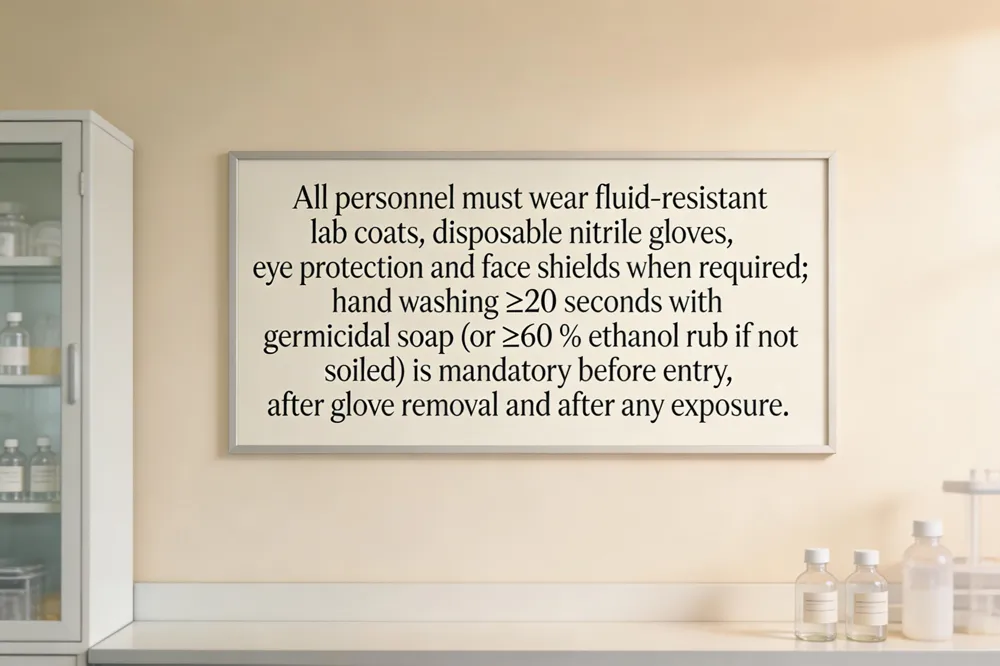
In a BSL‑2 microbiology laboratory, every technician must wear a complete set of personal protective equipment (PPE) before any manipulation of pathogenic agents. The required PPE includes a fluid‑resistant lab coat or gown, disposable nitrile gloves, safety glasses or goggles, and a face shield or mask when splashes or aerosols are possible (e.g., handling Shigella, E. coli O157:H7, hepatitis B–positive specimens). Hand hygiene is a cornerstone of infection control; hands must be washed with germicidal soap for at least 20 seconds before entering the lab, after glove removal, and after any contact with infectious material. When soap is unavailable, an alcohol‑based hand rub (≥60 % ethanol) may be used, provided the hands are not visibly soiled. Strict prohibitions apply to eating, drinking, smoking, chewing gum, applying cosmetics or lip balm, and any oral contact with specimens; these activities are confined to designated non‑lab zones to prevent accidental ingestion or contamination. Staff who are pregnant, immunocompromised, or have chronic illnesses must be identified during pre‑employment screening and assigned to low‑risk tasks or provided with additional protective barriers (double gloving, respirators) to minimise exposure risk. Immediate reporting of any breach in personal protective equipment (PPE) or hand‑hygiene protocol to the supervisor is mandatory to ensure rapid corrective action and maintain a safe laboratory environment.
Engineering Controls: Biosafety Cabinets and Facility Design
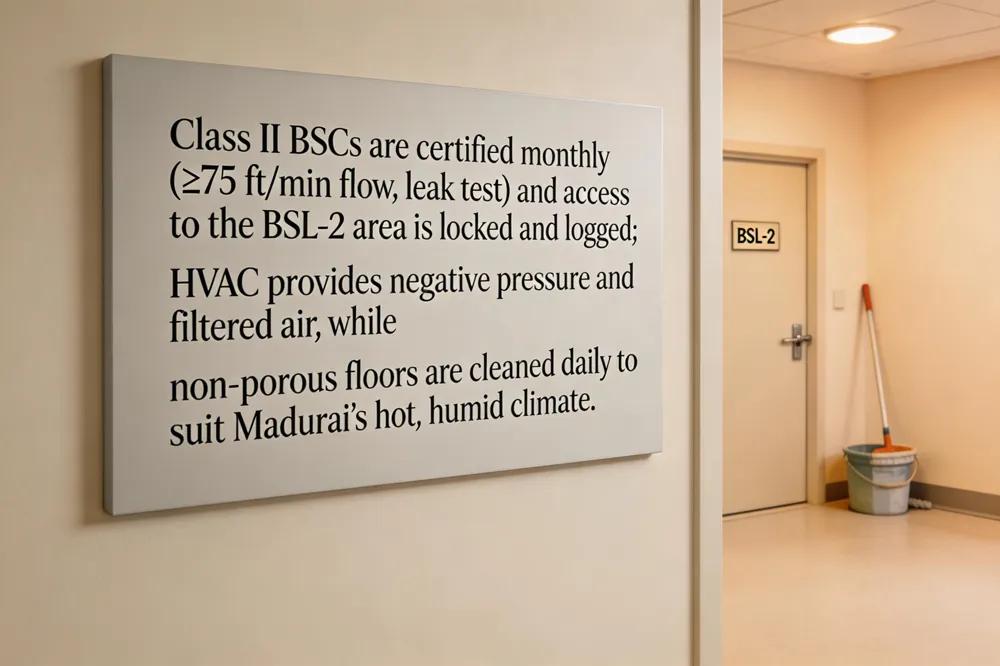
The microbiology laboratory at Agam Diagnostics in Madurai relies on certified Class II Biological safety cabinets (BSCs) for every procedure that could generate aerosols or splashes. These cabinets provide directional airflow, HEPA‑filtered exhaust, and a physical barrier that protects personnel and the environment from pathogenic microorganisms such as Shigella, E. coli O157:H7, and hepatitis‑B‑containing specimens. To maintain the integrity of the containment, each BSC is examined by a qualified technician at least once a month; the certification includes a flow‑rate check (≥ 75 ft/min) and a leak test with a calibrated smoke pen. Records of the airflow verification and filter integrity are kept in the laboratory safety log and reviewed during the quarterly biosafety audit.
Access to the BSL‑2 area is strictly controlled. The door remains locked when work is not in progress, and a biohazard sign is posted on the entrance and on each piece of equipment. Only trained personnel who have completed the required biosafety training may enter, and a sign‑in sheet provides an additional layer of accountability.
Because Madurai’s climate is hot and humid, special attention is given to ventilation and floor maintenance. The laboratory is equipped with an HVAC system that supplies filtered, temperature‑controlled air and maintains a slight negative pressure relative to adjoining spaces, limiting the spread of airborne contaminants. Floors are non‑porous, kept free of clutter, and cleaned daily with a germicidal solution (1 % sodium hypochlorite or 70 % ethanol) to prevent microbial growth on surfaces and to reduce slip hazards. These engineering controls, combined with rigorous BSC certification and access management, create a safe work environment that complies with BSL‑2 standards, NABL and ICMR accreditation, and OSHA‑derived best practices.
Waste Management and Decontamination
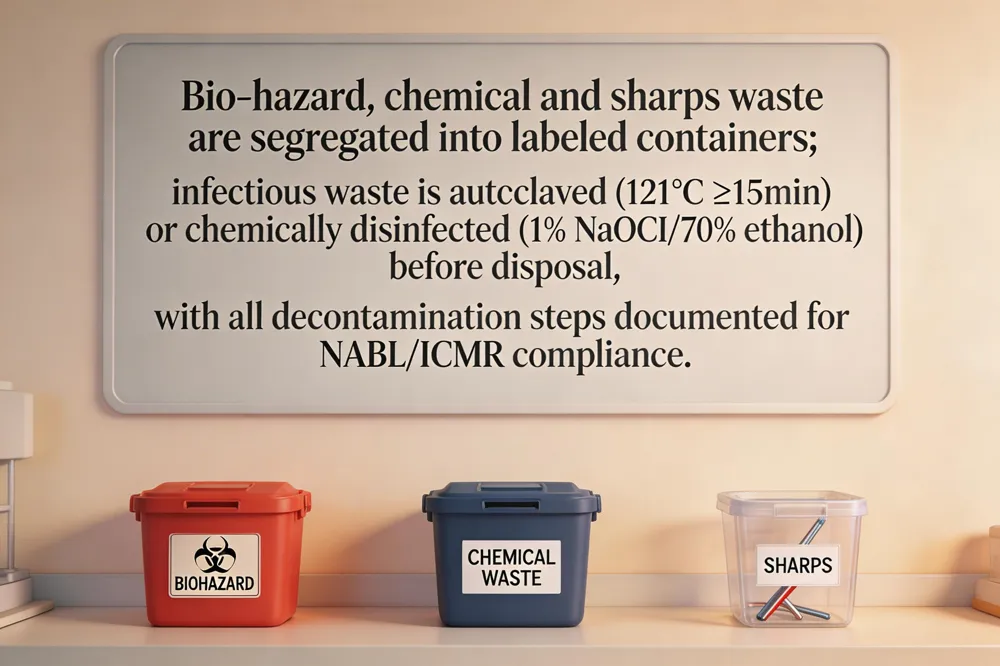
Effective waste management begins with strict segregation of biohazard, chemical, and sharps waste. In a BSL‑2 microbiology laboratory, all contaminated plates, tubes, and clinical specimens are placed in clearly labeled biohazard containers, while chemical residues go into separate, chemically compatible bins. Sharps—needles, scalpels, broken glass—must be deposited immediately into puncture‑resistant, red‑coded sharps containers; pink waste tags affixed to each container identify the contents and ensure proper tracking. Before final disposal, all infectious waste is either autoclaved at validated cycles (121 °C for ≥15 min) or chemically disinfected using 1 % sodium hypochlorite or 70 % ethanol, with a minimum contact time of 15 minutes for spills. Work surfaces, equipment, and laboratory floors are decontaminated routinely: bench tops receive a phenolic or bleach solution after each experiment, and floors are washed with a germicidal solution to keep the hot, humid environment of Madurai from fostering unwanted microbial growth. Documentation of waste segregation, decontamination cycles, and container labeling is required by NABL and ICMR accreditation, providing a traceable record that supports both safety and regulatory compliance.
Sharps and Needle Safety
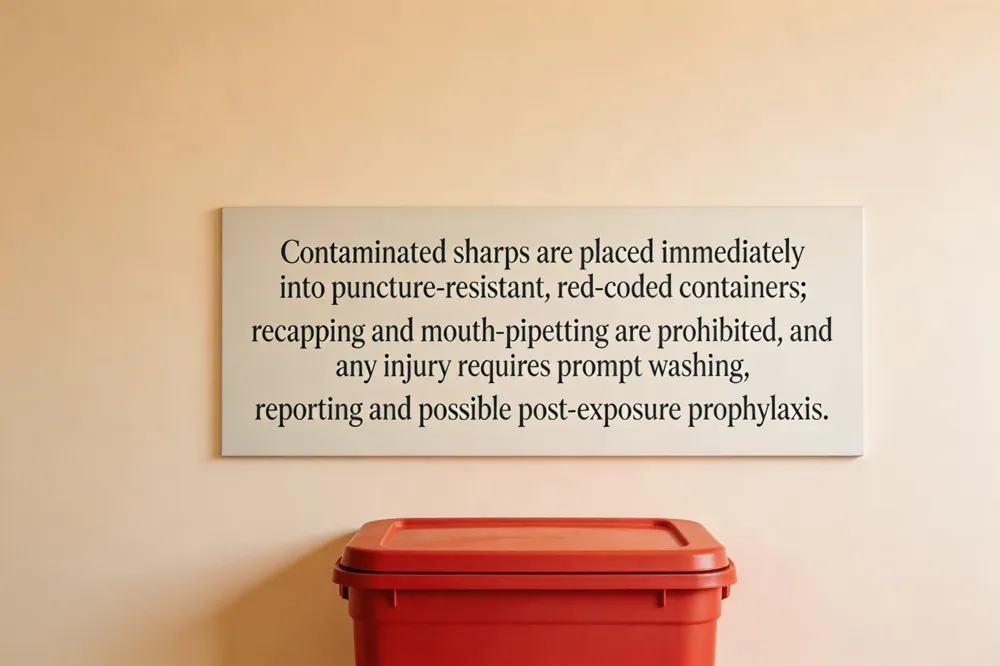
In a BSL‑2 microbiology laboratory, immediate disposal of contaminated sharps is mandatory. All needles, syringes, blades, slides, and breakable glass must be placed directly into labeled, puncture‑resistant sharps containers that are kept readily accessible on the bench. Recapping, bending, or attempting to mouth‑pipette needles is strictly prohibited because these practices significantly increase the risk of needlestick injuries and aerosol generation. Personnel receive thorough training on the safe handling of sharp objects, including the use of mechanical pipetting devices, rubber‑bulb pipettes, and proper techniques for disposing of broken glass using dustpans and designated broken‑glass containers. If a puncture or cut occurs, the wound should be washed immediately with disinfectant soap and water for at least 15 seconds, followed by thorough hand washing. The incident must be reported immediately to the supervisor or safety officer, and a documented incident report should be completed. Post‑injury protocols also include evaluation for possible post‑exposure prophylaxis, especially when blood‑borne pathogens such as hepatitis B or HIV are involved. Adhering to these practices, as outlined in OSHA, CDC, and Indian ICMR guidelines, minimizes laboratory‑acquired infections and maintains compliance with NABL accreditation standards at facilities such as Agam Diagnostics in Madurai.
Spill Response and Emergency Procedures
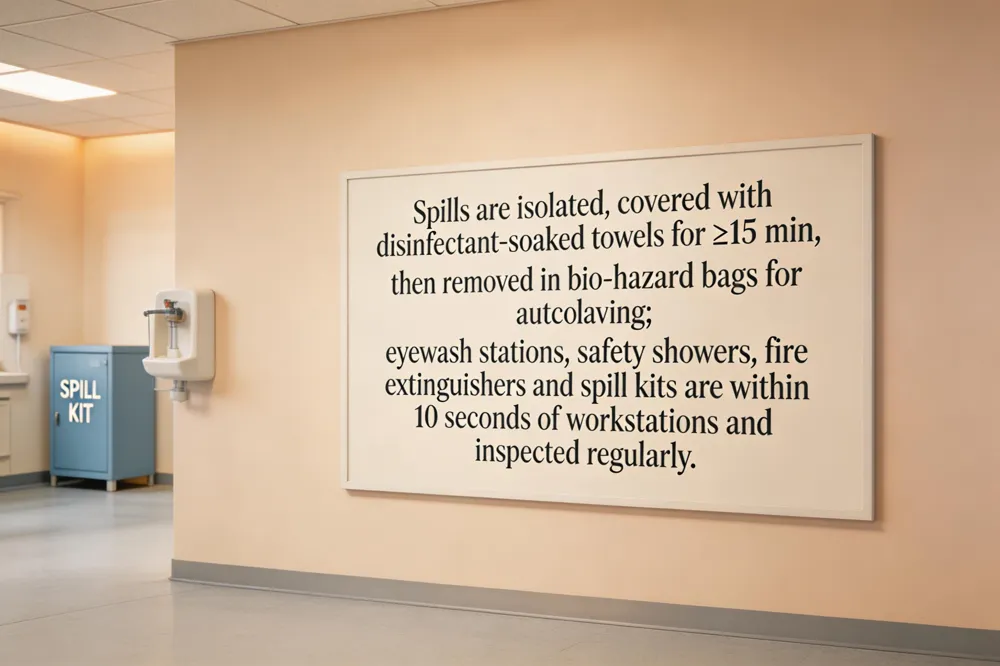
When a bio‑hazardous spill occurs in a microbiology laboratory, the first step is to isolate the area to prevent spread of contaminants. The technician should close the door, post a biohazard sign, and restrict access until the spill is contained. Using disposable towels soaked in an appropriate disinfectant—such as 1 % sodium hypochlorite, phenolic disinfectant, or 70 % alcohol—the spill is covered completely and left for a minimum of 15 minutes to achieve the required contact time for microbial inactivation. After the contact period, the soaked towels and any contaminated material are removed with gloves still on and placed in a labeled biohazard waste container for autoclaving before final disposal.
All personnel must be familiar with the location and proper use of emergency equipment. Eyewash stations and safety showers are positioned within 10 seconds of any work area, and must be flushed for at least 20 seconds (or five minutes for chemical splashes) before medical evaluation. Fire extinguishers, fire blankets, and spill kits should be readily accessible, inspected regularly, and staff trained in their deployment.
Any injury, spill, or unusual incident—no matter how minor—must be reported immediately to the supervising scientist or laboratory manager. The report should include details of the agent involved, the volume spilled, the decontamination steps taken, and any personal exposure. Prompt reporting enables proper documentation, facilitates corrective actions, and ensures compliance with OSHA, NABL, and ICMR biosafety standards.
Training, Documentation, and Regulatory Compliance
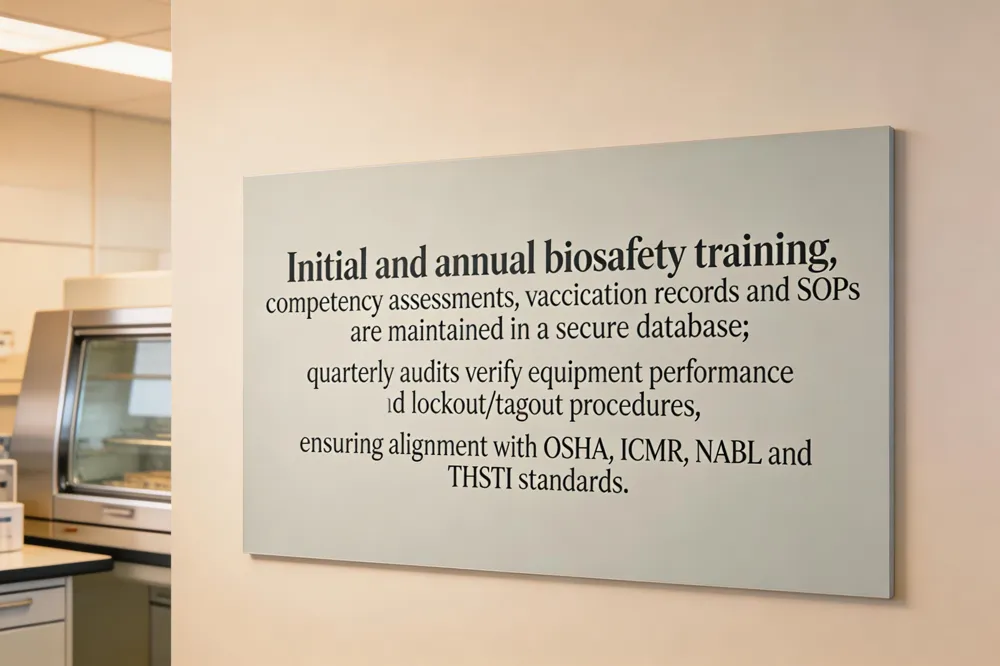
Initial and annual biosafety training for all personnel
Every technician and scientist at Agam Diagnostics receives an intensive induction on BSL‑2 practices, proper use of biological safety cabinets, PPE selection, and spill‑response protocols. The curriculum is refreshed annually to incorporate updates from OSHA, ICMR, and THSTI, ensuring that staff remain competent in handling pathogens such as Shigella, E. coli O157:H7, and hepatitis‑B specimens.
Maintenance of training records, vaccination status, and competency assessments
Training logs, competency check‑lists, and immunisation records (hepatitis B, typhoid, influenza) are stored in a secure electronic database and reviewed during each safety audit. Personnel must sign a competency declaration after each refresher course, and any gaps trigger immediate remedial training.
Adherence to OSHA, ICMR, NABL, and THSTI guidelines
The laboratory’s written safety plan aligns with OSHA’s Bloodborne Pathogen Standard, ICMR biosafety rules, NABL accreditation requirements, and the THSTI manual on containment. All SOPs, signage, and waste‑segregation procedures reference these standards, and deviation is documented and investigated.
Regular safety audits, equipment calibration, and lockout/tagout procedures
Quarterly internal audits verify that autoclave cycles, BSC airflow, and fire‑extinguisher inspections meet prescribed limits. Critical equipment undergoes scheduled calibration, and lockout/tagout protocols are applied before any maintenance to prevent accidental start‑up. Findings are entered into the laboratory’s audit register, and corrective actions are tracked until closure.
Special Considerations for Madurai Climate and Home Collection Services
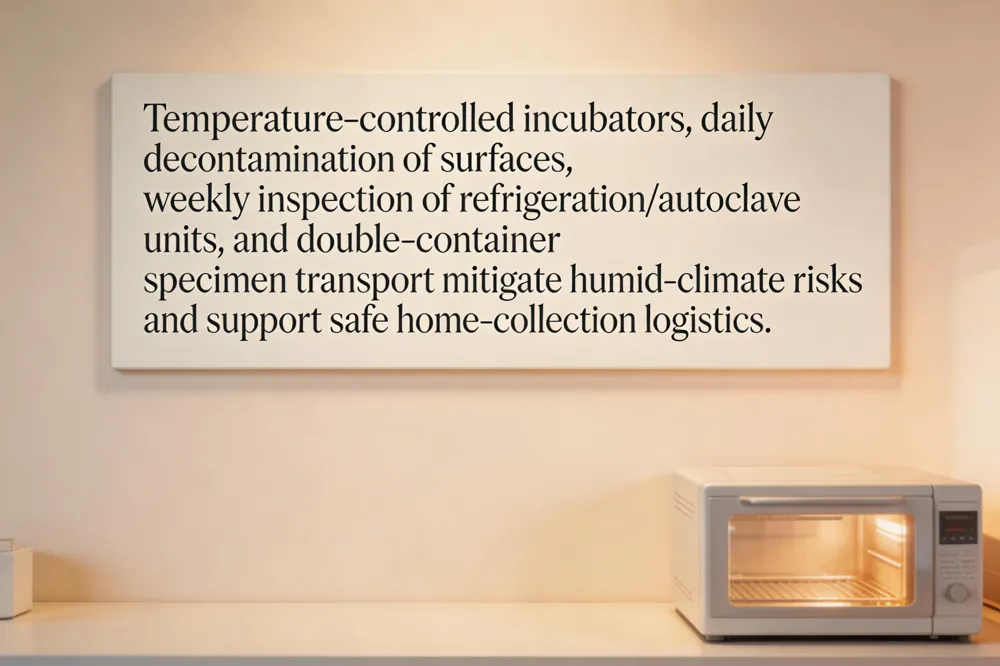
Madurai’s hot, humid climate (average 28 °C and high relative humidity) can accelerate microbial growth on incubator surfaces and laboratory benches. To maintain BSL‑2 compliance, incubators must be equipped with calibrated temperature and humidity sensors, and daily logs should verify that set points remain within ±1 °C. Surfaces should be decontaminated with 70 % ethanol or 1 % sodium hypochlorite after each use, and a weekly deep‑cleaning schedule is essential to prevent biofilm formation that thrives in humid conditions.
Refrigerators, freezers, and the autoclave are critical points of containment for infectious specimens. In Madurai’s climate, condensation can cause container cracks that compromise sterility. Personnel must inspect these units weekly for broken vials, cracked caps, or frost‑buildup, and any compromised container should be discarded in a biohazard bag and autoclaved before removal. Autoclave performance must be validated regularly with spore strips, and temperature logs should be reviewed to ensure a minimum of 121 °C for 15 minutes.
Specimen transport follows the double‑container principle: a sealed primary container (e.g., screw‑cap tube) is placed inside an unbreakable secondary container that can be sealed. This arrangement meets WHO and ICMR packaging guidelines, preventing leaks during the free home‑collection service offered by Agam Diagnostics. Couriers are trained to handle containers gently and to report any breach immediately.
Integration of these protocols into Agam Diagnostics’ workflow includes a pre‑collection briefing for technicians, a checklist that confirms PPE use, hand hygiene, and equipment checks, and a real‑time incident reporting system. By aligning daily practices with NABL‑accredited SOPs and ICMR biosafety standards, the laboratory maintains a safe environment despite climatic challenges and the added logistics of home‑collected specimens.
Conclusion
In summary, microbiology technicians at Agam Diagnostics must follow a strict set of safety protocols: wear appropriate PPE (lab coat, gloves, eye protection), practice rigorous hand‑washing, work exclusively within certified biosafe cabinets, prohibit mouth pipetting, and decontaminate all surfaces and waste with validated disinfectants before disposal. Sharps are to be placed in puncture‑resistant containers, and any spill or injury must be reported immediately. Agam Diagnostics is committed to ongoing safety improvement through regular training, equipment certification, and compliance with NABL, ICMR, and OSHA standards. All staff are urged to uphold these standards daily, report hazards promptly, and contribute to a culture of zero‑tolerance for unsafe practices.